Click here to sign up for our free daily newsletter
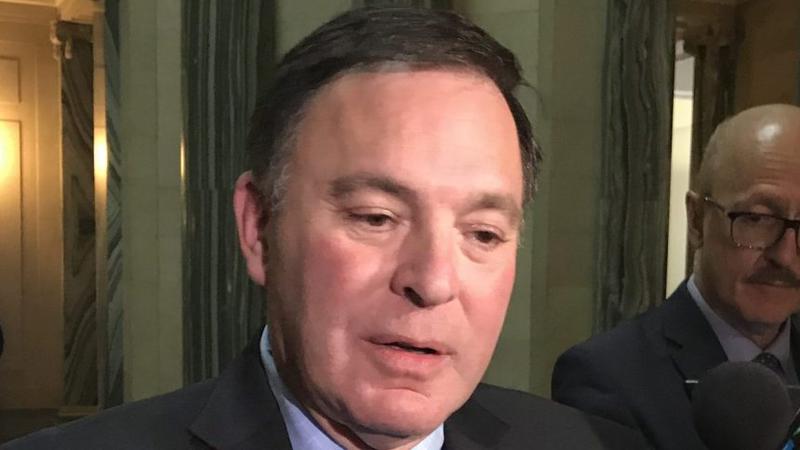
Education Minister Gord Wyant. (File photo by Lisa Schick/980 CJME)

Saskatchewan’s back-to-school plan features eight components

Aug 4, 2020 | 2:48 PM

Students and parents learned more about Saskatchewan’s back-to-school plan Tuesday.

The provincial government released details about the plan that is to apply when schools reopen Sept. 1.

The government closed schools in March due to COVID-19 and offered virtual learning for students interested in continuing their education.

In June, the province announced in-person classes would resume in the fall and, on Tuesday, provided more of the details for the plan developed by Saskatchewan’s 27 school divisions.

“Our guiding principle continues to be ensuring schools are a safe place for students and staff,” Education Minister Gordon Wyant said in a media release. “These plans and eight areas of focus will allow school communities to have the guidance and appropriate time to implement the required safety measures.”

The divisions’ plans went through Saskatchewan Education’s Response Planning Team (RPT) to make sure they followed the guidelines set out by the RPT and Saskatchewan’s chief medical health officer, Dr. Saqib Shahab.

There are eight components of the plan.

Safe Attendance

Parents and caregivers will be asked to monitor children for any symptoms of illness. If symptoms are present, the student is to stay home from school.

Those who aren’t sure if they may need to be tested for COVID-19 should use the provincial government’s COVID-19 Self-Assessment Tool.

Schools also will set up quarantine areas where individuals showing symptoms will be isolated from the rest of the school until they can be picked up by a parent or caregiver.

Safe Transportation

If it’s possible, the province would like parents to drive their kids to and from school.

If busing is required, there will be assigned seating for students, with a record of the seating plan to be kept on buses. Students from the same household will sit together.

Buses and other vehicles that are used to drive students to and from school will require cleaning and sanitation between each run.

Safe Access

Students will have dedicated entrance and exit doors, and recess, lunch and other class transition times will be staggered to allow for additional space.

There also will be a controlled flow of students and staff in common areas through the use of directional signage and floor markings.

Safe Facilities

There will be increased availability of hand sanitizer when possible and custodial staff will regularly sanitize school facilities.

Staff will be required to maintain hygiene of all frequently touched surfaces and objects such as toys and classroom equipment.

Safe Classrooms

In the classroom, physical contact such as hugs and holding hands will be limited and the layout of desks will be changed to minimize contact.

Classes will be held outdoors when possible and guidelines will be created for taking things such as backpacks and school supplies into and out of schools.

Safe Supports

Local health officials will provide support to divisions for interactions with intensive needs or immunocompromised students.

As well, medically fragile students will get support to address their educational needs.

Safe Activities

Group activities will be re-examined to reduce physical contact.

That includes protocols for the reduced use of shared materials and classroom supplies and holding virtual assemblies.

Extracurricular activities such as indoor sports will be allowed, but they must follow the most current guidelines instituted by Shahab.

Safe Alternatives

Depending on the progress of the virus, four scenarios could be activated regionally or provincially based on Shahab’s advice.

The first is a normal return to school, with additional safety precautions. That’s the government’s current plan.

The second scenario will require mask usage. Masks are being purchased by the Ministry of Education and are to be distributed to school divisions in case they’re needed.

In the third scenario, school capacity will be reduced. That may involve the creation of cohorts or hybrid learning models.

The fourth scenario would see the implementation of mandatory remote learning.

More to come.