Click here to sign up for our free daily newsletter
(Photo 2348052 © Lastdays1 | Dreamstime.com)
Provincial Investments

Multiple northeast communities receive EMS enhancements

Apr 20, 2023 | 5:43 PM

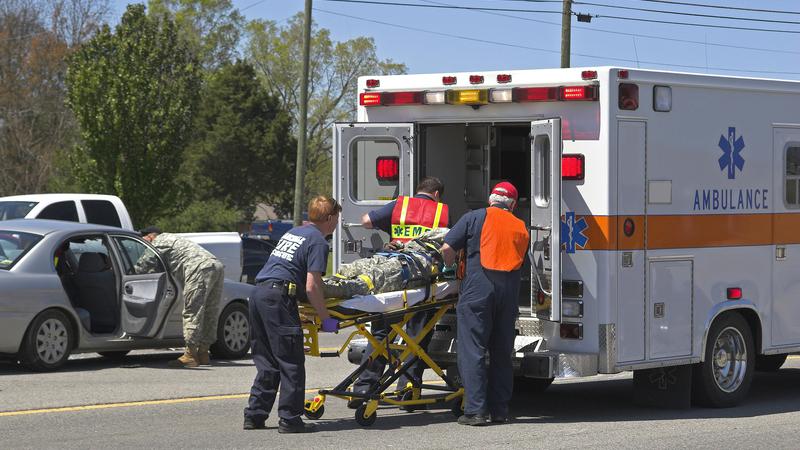
The Government of Saskatchewan has increased its annual funding by $8.8 million to support Emergency Medical Services (EMS) improvements.

Some 31 communities across Saskatchewan will see rural and remote ground ambulance staff added, community paramedicine expanded, wage parity issues addressed or more operational funding provided for contracted EMS operators and communication upgrades.

Four of the 31 communities included are in the northeast, such as Hudson Bay, Nipawin, Porcupine Plain, and Wakaw.

“EMS providers in Saskatchewan communities are on the frontlines of patient care, and our government is committed to supporting this critical priority area with funding for additional paramedics, ambulances and other essential resources,” said rural and remote health minister, Everett Hindley, in a press release sent to northeastNOW.

“This year’s investment is part of a multi-year commitment to stabilize emergency services and modernize the system to improve overall response times, patient care and patient flow through the system as well as addressing offload delays.”

All four northeast communities are going to receive an increase in paid hours to staff current ambulance resources eight hours a day, 16 hours on call, as their incremental investment for 2023/24.

The funding increase of $8.8 million also includes over $3.5 million to support the addition of 33 full time equivalent (FTE) positions.

Meanwhile, contracted EMS providers across the province will also receive a $2.6 million increase in wage parity funding to assist with recruitment and retention measures by ensuring wages remain competitive.

Other investments include $866,000 to support a two per cent grant increase for contracted ambulance operators across the province to mitigate rising operational pressures, and over $1 million to support EMS communications equipment and technology upgrades.

“It means more stabilized funding and a more stabilized staffing model for us, which includes another staff eight-hour car, which makes it more attractable to retain staff, and really does stabilize our call volume issues,” explained Steven Skoworodko, Chief of Wakaw and District EMS.

And not only do these funds allow rural EMS to expand, but it allows them to keep up with inflation. According to the Northeast EMS, prices have gone through the roof.

For example, to order an empty ambulance to add to your fleet four years ago, it would have cost roughly $140,000. Now, for the same vehicle, it’s in the ballpark of $215,000.

“A lot of people were seeing an increased cost of 40 per cent, so that was killing some operators,” Northeast EMS Chief, Jessica Brost, told northeastNOW. “It’s tough to maintain a business where you want to keep great equipment and best patient care, and that all suffers when when operational funding isn’t in place, but this new enhancement is a big step in the right direction.”

news@northeastnow.com

On Twitter @BenTompkins_8