Click here to sign up for our free daily newsletter
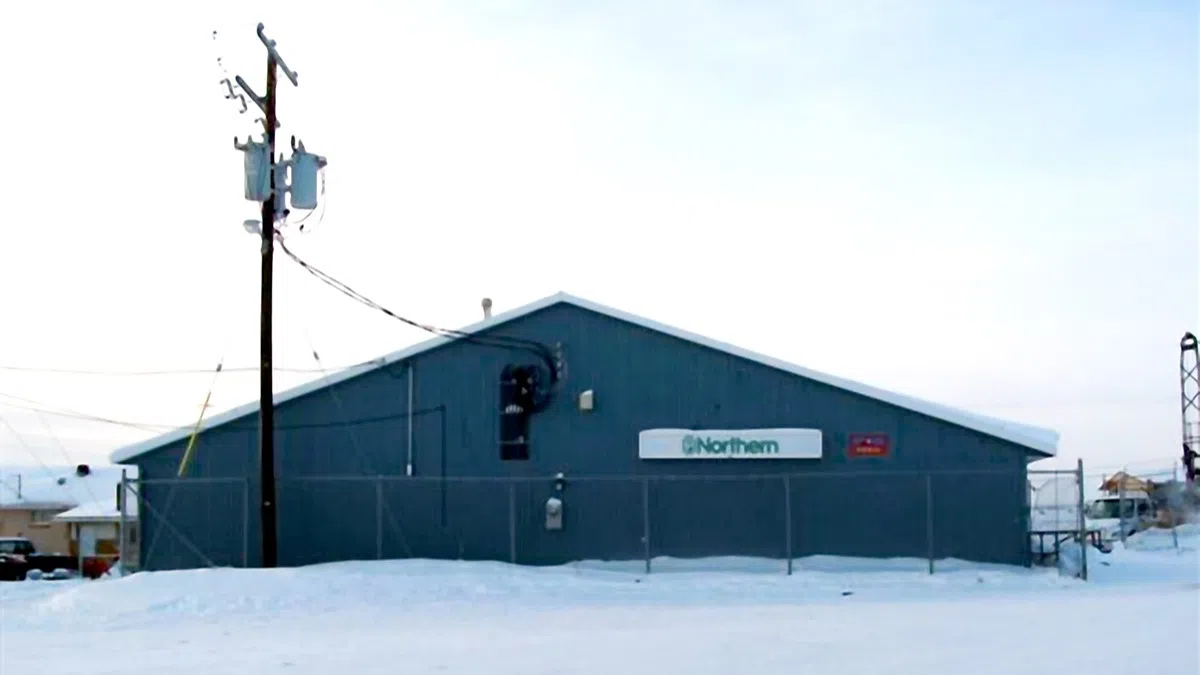
An expert in economics doesn't believe a community-run store will guarantee lower prices. (Image Credit: North West Company)
deep roots

Northern store in Fond du Lac closes

Feb 18, 2026 | 1:50 PM

After more than a 100-year presence in Fond du Lac, the North West Company (NWC) no longer has a store there as of Feb. 15.  

That’s according to Brigitte Burgoyne, the director of communication and public relations for the company, who stated in an email the closure of their Northern store operations in Fond du Lac follows the conclusion of lease discussions with the Fond du Lac Denesuline First Nation after nearly two years of engagement. 

“We are disappointed in the outcome,” she wrote.  

“The Northern store has been part of Fond du Lac for many years, and we are proud to have served the community for so long. We are grateful to the community for the trust placed in us over generations, and we want to sincerely thank our employees, past and present, who served their neighbours with dedication and care. Should an opportunity arise in the future to serve Fond du Lac again, we would welcome that discussion.” 

Inventory at the store was sold at clearance, and on their last day of operations, NWC donated all remaining grocery items to the community, with Elders receiving first priority. 

While larongeNOW was unable to reach Fond du Lac Chief Ronnie Augier for an interview on the closure, a letter issued by band council earlier this month stated there were ongoing unspecified concerns at the business, along with concerns about a recent health inspector’s report. 

The letter adds band leadership plans to take over operations, as well as expand it with a new restaurant and a section for the sale of cultural crafts. It also mentions with assistance from Indigenous Services Canada, the band has ordered fresh food to be distribute to members to ensure food security during the transition. 

While First Nation communities taking over their local food store operations from private ownership, or compete with it, isn’t very common, it does happen. Associate Professor in the Department of Economics at Toronto Metropolitan University Nicholas Li stated Kitchenuhmaykoosib Inninuwug (Big Trout Lake) in Ontario and Old Crow Yukon already have, while there are current discussions to do so in Norway House in Manitoba and Attawapiskat in Ontario. 

Li, who studies food security in Canada’s North, noted some of the benefits of opening a community-run or a co-op store include more money staying in the community and increased local oversight. 

“I think community stores and co-ops, especially when they don’t have to compete, have more leeway over assortment/selection and pricing,” he wrote in an email. 

“They can choose to prioritize and charge lower prices on some items, while making a larger profit on others, rather than exclusively focus on maximizing profits. Maximizing profits often involves choosing the products that people want and even corporate store managers have some input into assortment (they know better than HQ what will sell in many cases), but community stores/co-ops typically have more autonomy.” 

Community ownership, however, doesn’t guarantee lower prices. For instance, in 2020 before the federal government stopped tracking prices, Old Crow had the most expensive food basket price according to Nutrition North Canada. It also had the highest price in March 2012 when it was still an NWC store. 

“The change to co-op operations didn’t change that,” Li remarked.  

“But it sounds like people are happy with getting some patronage dividends, even if they may have hoped there would also be lower prices. I don’t think we have enough instances of changes in ownership like this one to make any generalizations at this point.” 

An external review of the Nutrition North program remains underway to determine its effectiveness on pricing in the wake of food security.

derek.cornet@pattisonmedia.com