Click here to sign up for our free daily newsletter

Research scientist reviews top canola pest of the 2025 growing season

Dec 5, 2025 | 2:48 PM

The Bertha armyworm, cabbage seed pod weevil and canola flower midge were among the more visible insect pests in canola this year.

Agriculture and Agrifood Canada research scientist Meghan Vankosky is based in Saskatoon, Sask. She provided the 2025 insect review for those attending Canola Week meetings.

Starting with Bertha armyworm, she said numbers had been very low across the Prairies since she started her position in 2016. However, in 2025, there were some slightly concerning trap counts, especially in Saskatchewan.

“We are potentially seeing an uptick in Bertha armyworm. This is an insect that has population cycles, so they usually start to build and then they reach an outbreak level and then the population will crash, and we won’t see it for a few years,” she said. “It does seem like at least in Saskatchewan we’re in that population-building cycle, and it’s something to watch out for in 2026.


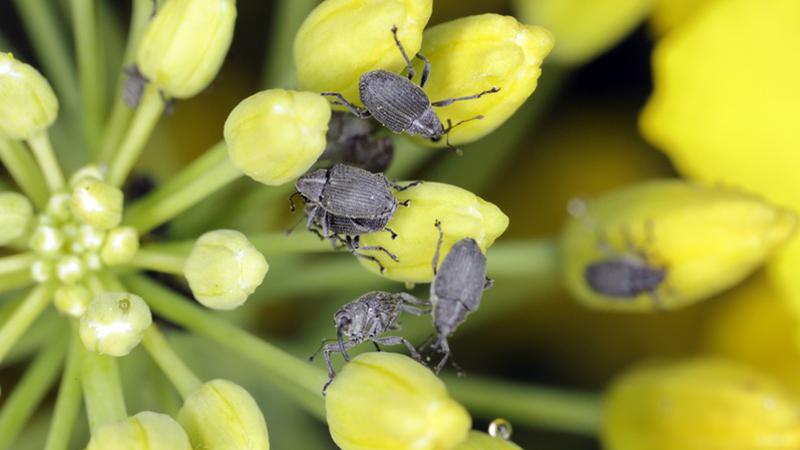
Speaking of cabbage seed pod weevil, Vankosky said the insect has moved further east. Populations had contracted in some of the dry years but in 2024, there was a rebuilding of the population.

“Then in 2025, we saw so many fields with high numbers of cabbage seed pod weevil, which we really weren’t expecting. It was kind of a weird year weather-wise. We counted in our sweep samples more cabbage seed pod weevil this past year than we had since 2016-2017. So, it’s a big story,” she added.

Vankosky said the cabbage seed pod weevil provided an entry point for another insect. Because they were chewing on the pods, they were providing an entry site for canola flower midge to get into pods.

“So, at the end of the season, farmers were finding these little orange larvae inside their canola pods, and they were wondering what those were,” she said. “Thankfully, we did confirm that they are canola flower midge, and so it’s not a trade problem or anything like that. But this was something that was kind of unexpected over the course of the summer.”

Vankosky said it is still not clear if the canola flower midge impacts canola yields. Despite its name, the insect’s preferred host does not appear to be canola.

There was some positive insect news. Grasshopper numbers were lower than anticipated in many areas. Diamond back moths weren’t a major issue in most areas either but Vankosky said it is always important to monitor in case larger numbers were blown in from the United States than usual.

alice.mcfarlane@pattisonmedia.com