Click here to sign up for our free daily newsletter
(Image Credit: Cam Lee/northeastNOW Staff)
Focusing on prevention

Scam and fraud presentation in Melfort

Feb 25, 2026 | 12:04 PM

Focusing on fraud and scams. 

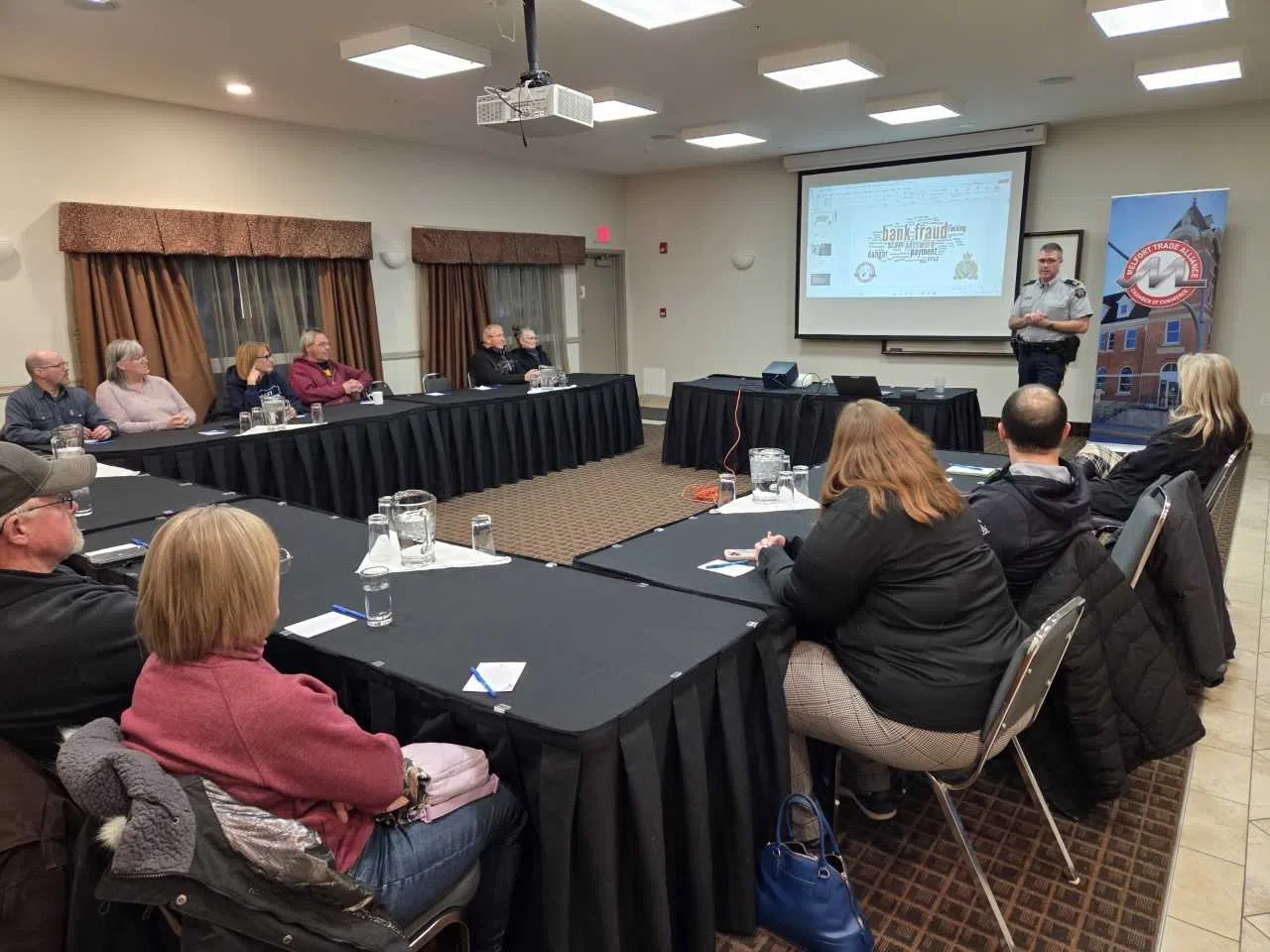
The Melfort Trade Alliance Chamber of Commerce hosted a scam and fraud presentation at the Canalta Hotel in Melfort Tuesday night. 

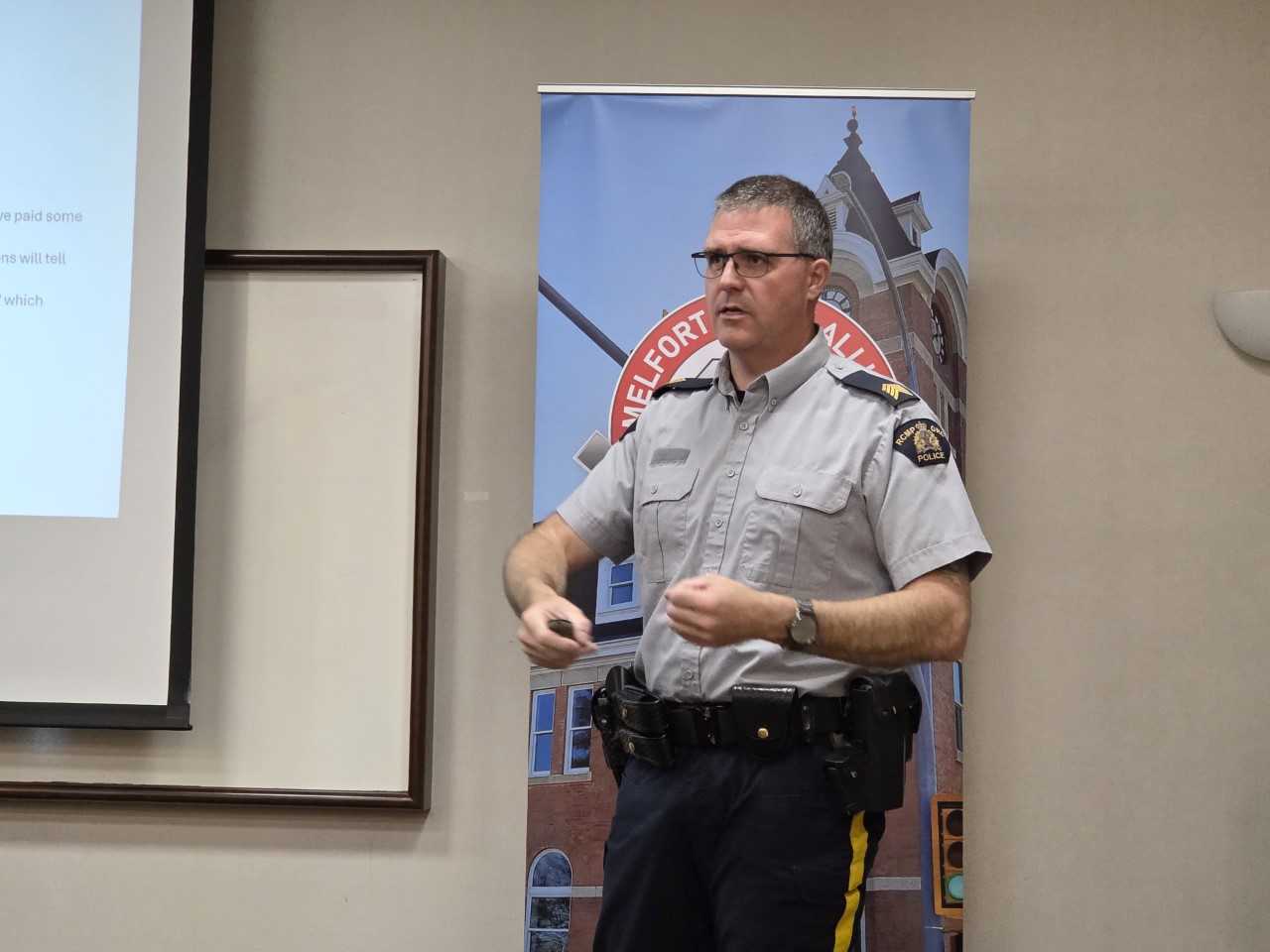
The guest speaker was Melfort RCMP Staff Sgt. Ryan Case, who discussed the various scams making the rounds, and what residents and business owners can do to avoid becoming a victim. 

(Image Credit: Cam Lee/northeastNOW)

Case told northeastNOW the main goal of the meeting was to prevent the scams from happening in the first place. 

“All we do is ask people to ask a lot of questions, be suspicious of what you’re being asked to provide, and be critical of what is being asked,” Case explained. “Don’t be afraid to ask those questions.”  

Case said people need to determine that who they are talking to is a legitimate source, and that they have a right to any information you provide.  

The scams constantly evolve, and Case said the scammers are very good at what they’re doing. Case said people often miss the smaller details, such as a deliberately mistyped link that’s close enough to the real link to pass.  

The meeting explained many of the scams making the rounds, focusing on investments, romance, fraudulent charities or donations, or the ever-present grandparent scam. Case said in many cases, a scam caller will start off by being friendly, but that’s quickly replaced by often rude behaviour and high-pressure tactics to ‘force’ the victim into making a decision that they ultimately regret. 

“By putting that pressure on that person, [the scammer is] ultimately convincing them to provide [personal or banking] information,” Case said. “Obviously, it’s a tactic that works for them.” 

As those scams evolve, they grow, and there are more victims. Case said one of the biggest scams involve bank impersonators, with either callers or people via email or text trying to convince people to provide personal information like name, social security number, and date of birth – the so-called ‘holy trinity’ of scam info. 

The scammer in that case attempts to convince the person that there’s something wrong with their account, and they are there to help, but they demand that personal information to do so.  

Another familiar scam will likely ramp up with this being tax season – the Canada Revenue Agency (CRA) scam. Case said in those scams, the fraudulent CRA demands some sort of payment for a ‘fine’ with something other than cash or a direct deposit. Often that includes iTunes cards, Google Play cards, or Visa gift cards.  

“Any time that these ‘supposedly’ legitimate organizations are asking for any type of gift card or Bitcoin or cryptocurrency…100 per cent a scam.” 

There have also been many frauds in which a scammer tells the victim that they won a trip, money, or some other prize in a lottery that they didn’t even enter. Case encourages people to use common sense and realize that they cannot win a contest in which they did not enter. 

For investment frauds, if the return looks too good to be true – it is, and it’s a scam. Ultimately, scammers want personal information for access to credit, or access to your device or computer to obtain that information. Many other scams are around, some focusing on extortion or sextortion, service scams like fly-by-night paving services, and even Facebook marketplace scams. 

Stats from the meeting revealed that in 2024, there were nearly 37,000 victims of fraud across Canada, with losses totalling more than $638 million. Case said those figures are likely much higher as many people don’t report being scammed because they are embarrassed. 

In Melfort, there were 85 reports of potential scams in each of 2023 and 2024, and 76 in 2025. Of that total, just 12 resulted in criminal charges, and 174 were unresolved or couldn’t be investigated. There were 22 that were deemed unfounded, and there was 1 scammer that received a police warning. 

Case said there are many challenges in prosecuting scams, including the intricate web of financial transactions, and that many scammers aren’t from Canada, and foreign countries don’t recognize Canadian authorities. 

– 

cam.lee@pattisonmedia.com