Click here to sign up for our free daily newsletter

Chief justice says institutions are strong after Smith targets court appointments

Feb 26, 2026 | 1:11 PM

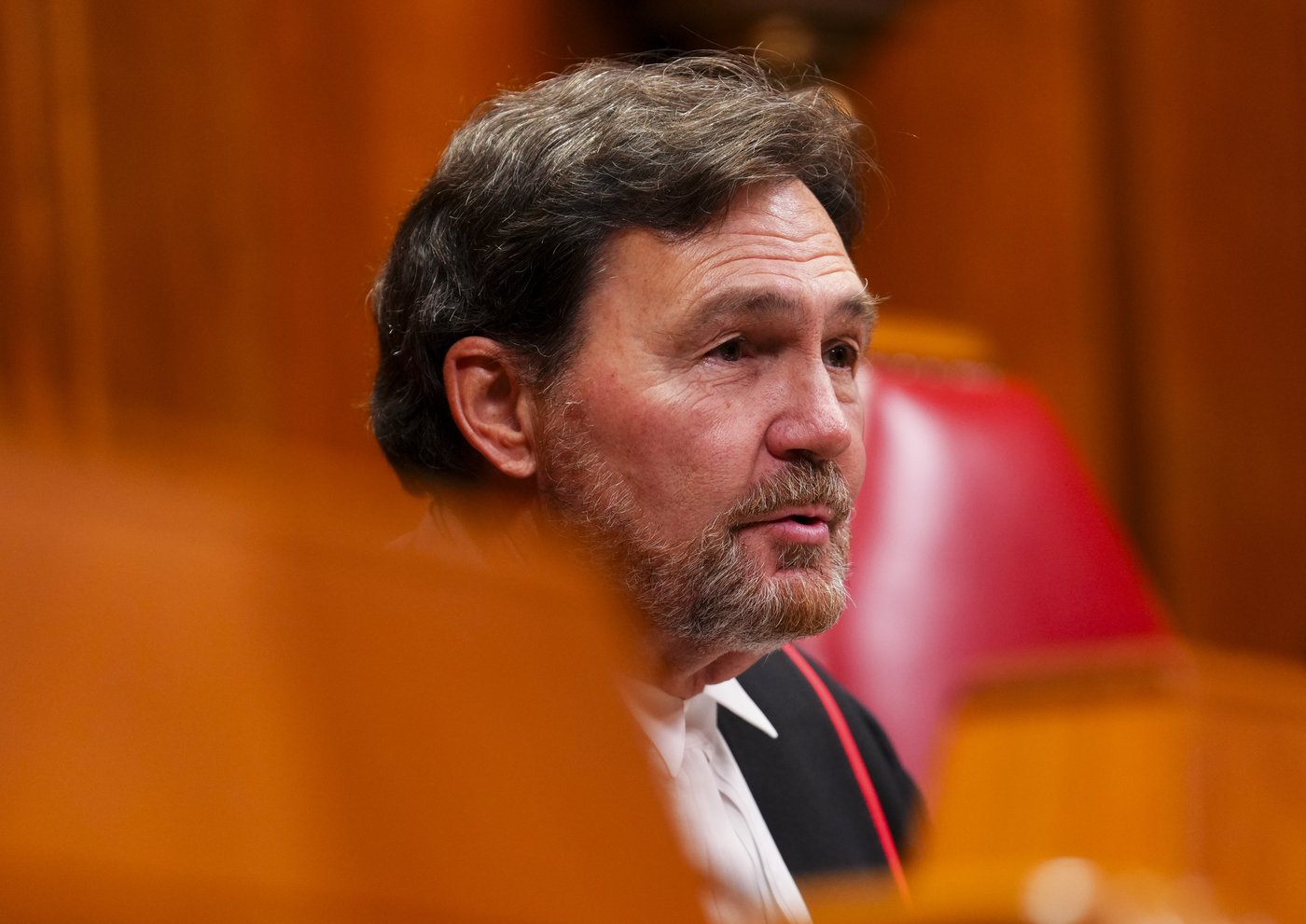
OTTAWA — Chief Justice Richard Wagner called on Canadian lawyers and judges to step up their efforts to defend the independence of the country’s courts on Thursday, noting while Canadians maintain a strong trust in their institutions, the system is still being heavily tested.

Wagner told the general meeting of the Canadian Bar Association Thursday that trust in the courts can’t be taken for granted.

“The independence of our courts continues to be tested,” he said in his speech. “We see pressure on appointment processes and threats to withhold funding for the justice system.”

He did not name Alberta Premier Danielle Smith in the speech, who in early February demanded the federal government give Alberta a bigger role in appointing judges to the province’s superior courts.


She also threatened to withhold funding for court support positions if that doesn’t happen.

Wagner said members of the bar association have been good at speaking up to defend the independence of the courts but in the current environment, even more effort on that is needed.

“Where the line is crossed is when criticism targets the very legitimacy of the judiciary or its right to make decisions,” Wagner said in French.

Wagner said there is a worrying decline of the rule of law but that Canada has strong institutions.

“Trust depends on judges remaining clearly distinct from political actors, judges must not mirror the rhetoric or values of partisan life,” he said. “Public trust is foundational to the judiciary’s ability to decide cases free from external pressure.”

Federal Justice Minister Sean Fraser said this month he has confidence in the current independent appointment process and he plans to maintain it.

In his own speech to the Canadian Bar Association on Thursday, Fraser said the nature of democracy in Canada and around the world is changing and that people are seeing a “hyper-polarized” political context.

“I find it extremely troubling when you have political actors who would argue that the justice system should be weaponized against their political opponents, when you see efforts to suppress voters who may align with a political party other than your own,” the minister said.

He said he’s “deeply” concerned about how different political actors from different political parties in different regions, treat the independence of the judiciary and the justice system more broadly.

“When I hear political actors not only criticizing court decisions but suggesting that the RCMP should jail their political opponents, we need to ask ourselves, will we accept this?,” he said.

“When I hear political actors criticizing the decisions of the court with full knowledge that the judge responsible for the decision doesn’t have an opportunity to defend themselves in public, you’re eroding the public’s trust in the rule of law and our democracy.”

In an interview last year, Conservative Leader Pierre Poilievre called the RCMP’s leadership “despicable” and accused it of covering up for former prime minister Justin Trudeau.

“Many of the scandals of the Trudeau era should have involved jail time,” he said. “Trudeau broke the Criminal Code when he took a free vacation from someone with whom he had government business.”

Poilievre later defended his comments and denied saying Trudeau should have gone to jail.

Fraser added Thursday that there is an ongoing debate about the role of the notwithstanding clause in Canada.

In late October, Alberta used the notwithstanding clause to legally backstop a bill that overrode teachers’ rights and ordered them back to work to end a three-week-long, provincewide strike.

In December, the Alberta legislature passed a bill confirming the government’s intention to use the notwithstanding clause to shield from legal challenge each of three current laws affecting transgender people.

The set of three laws will police names and pronouns in school, ban transgender girls from participating in amateur female sports, and restrict gender-affirming health care for youth.

“It is a troubling social trend when we see governments increasingly ready to reach for the notwithstanding clause in order to cater to a distinct political opportunity without regard for the rights of certain individuals that may be violated in the process,” he said.

This report by The Canadian Press was first published Feb. 26, 2026.

— With files from Anja Karadeglija, Lisa Johnson and Jack Farrell

Catherine Morrison, The Canadian Press