Click here to sign up for our free daily newsletter
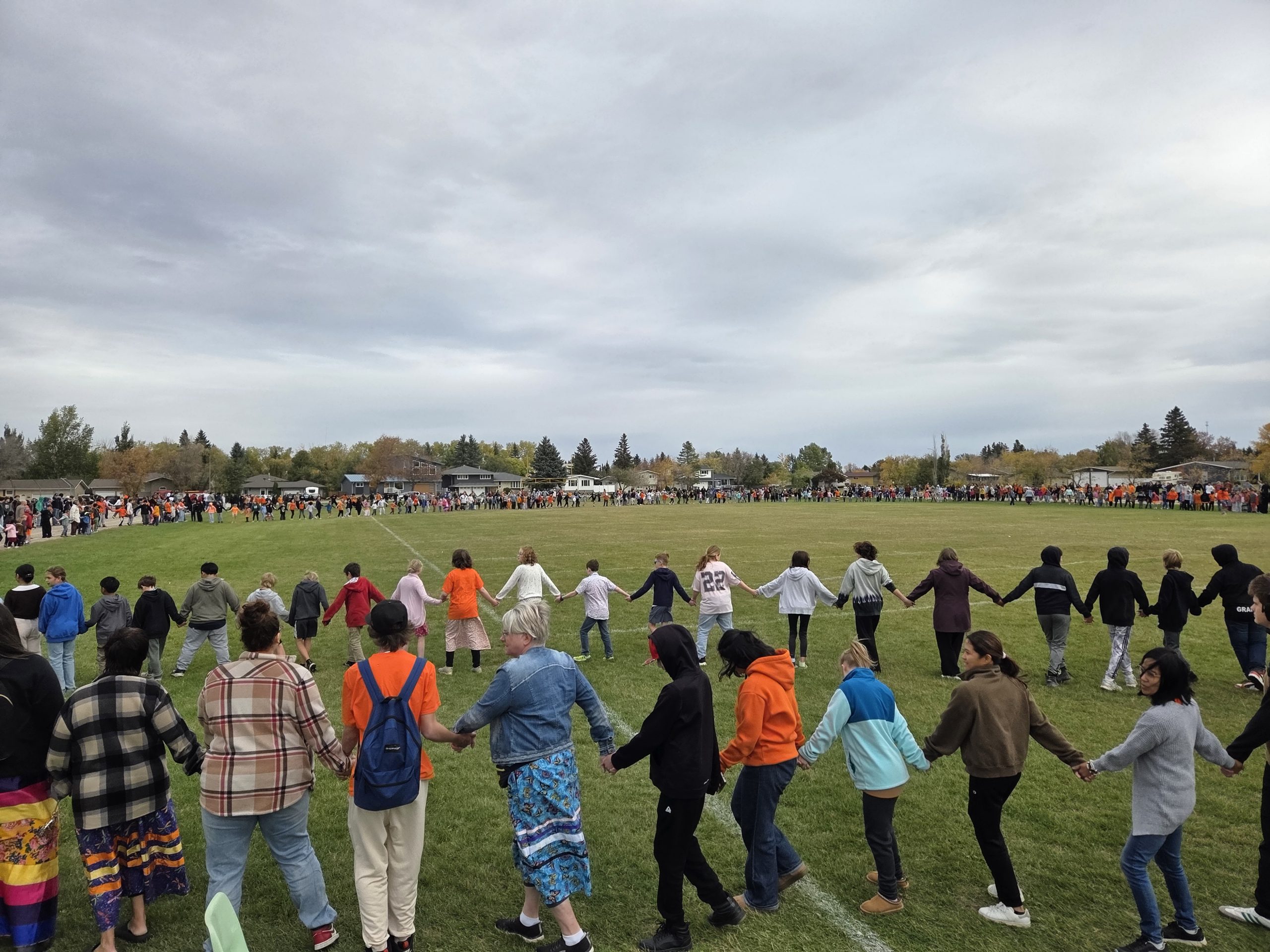
Hundreds gathered for the round dance and walk to honour the National Day for Truth and Reconciliation in Melfort on Tuesday. (Image Credit: Cam Lee/northeastNOW)
Round dance and walk

NDTR event in Melfort focused on Indigenous history, reconciliation

Sep 29, 2026 | 1:06 PM

Wearing an orange shirt once a year is not enough, Lori Constant told people gathered in Melfort Tuesday for a National Day for Truth and Reconciliation event.

“Putting on an orange shirt once a year is not working towards reconciliation,” said Constant, a member of Reconciliation Melfort. “There’s a lot to think about, there’s a lot to learn about, and never has there been so many resources and so many educational materials that we can learn from.”

Reconciliation Melfort hosted the event in partnership with MUCC and the Melfort Museum. Constant said it was first held a decade ago but fell away during the COVID-19 pandemic. It has since regained momentum through the efforts of MUCC principal Dave Painchaud, Melfort Museum curator Brenda Mellon and Reconciliation Melfort.

“But really, what makes it so great is we have such great commitment and participation from our schools, which is fabulous, and it’s great to see so many kids come out,” Constant said. “It’s just a really important event for us to acknowledge our past history and to think about what do we do on the day-to-day to be better and have a better community and really put our heart and soul into reconciliation.”
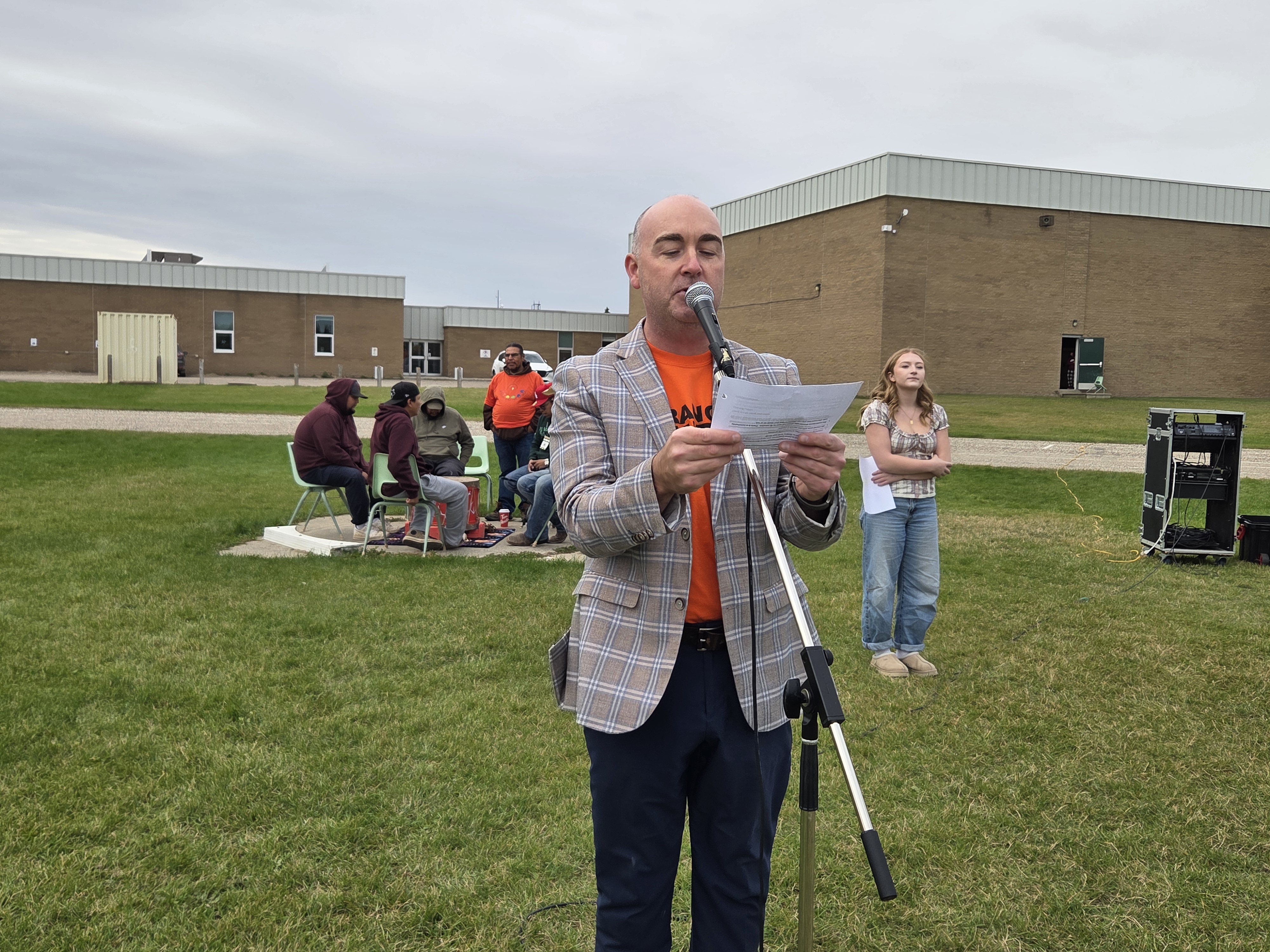
MUCC Principal Dave Painchaud addressed the crowd.
MUCC Principal Dave Painchaud addressed the crowd. (Image Credit: Cam Lee/northeastNOW)

Constant said schools now teach students about the history of residential schools and their lasting effects. She said that education was absent when she was growing up.

“I’m almost 60 and I never learned anything [about that history], not one thing, and so that learning has all come in my later adult years.”

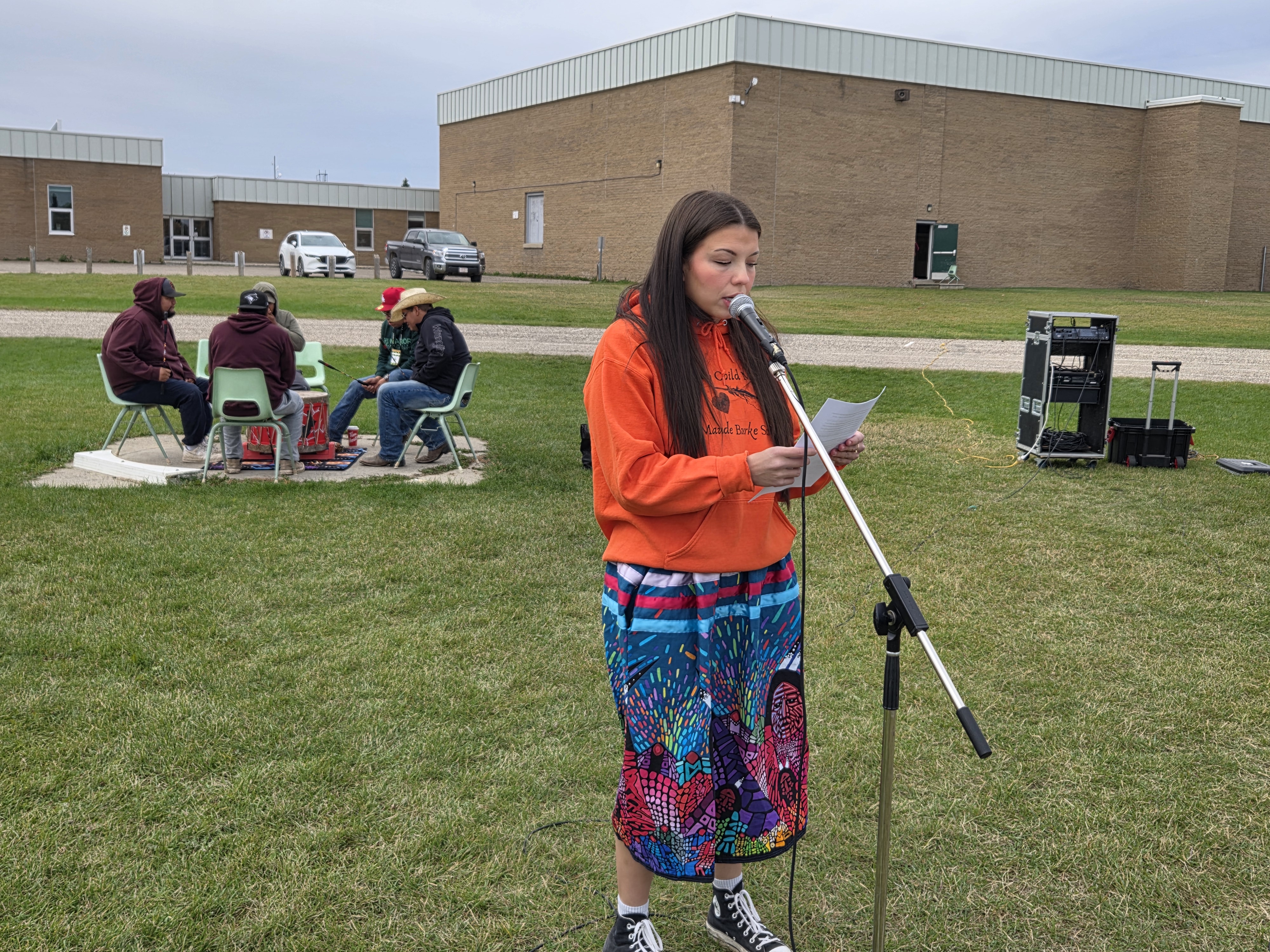
Her daughter Jenna also spoke at the event about her own journey. Jenna told the crowd her grandfather attended residential school and died before she could speak with him about it. Her father attended day school.

As a young person, Jenna said she hid her Indigenous background and even joined in racist comments she heard. Later, while working with Indigenous children, she realized she needed to accept her identity and heritage to give those children her full love.


Drum group Lightning Horse, made up of members of the Yellow Quill First Nation and James Smith Cree Nation, performed at Tuesday’s event.

Jenna spoke about the guilt she feels over her past behaviour and denial of her culture, as well as anger and frustration over the treatment of Indigenous people. She also spoke of hope for the future.

She thanked residential school survivors for sharing their stories and acknowledged those who died in the system. She also recognized the pain carried by families affected by residential schools and their efforts to raise their children differently.

“Indigenous history is Canadian history,” Jenna said. Echoing former Truth and Reconciliation Commission chair Murray Sinclair, she added that reconciliation “is not a spectator sport.”

Jenna Constant's emotional speech focused on her Indigenous heritage, and the shame of her denying her own background for many years.
Jenna Constant’s emotional speech focused on her Indigenous heritage, and the shame of her denying her own background for many years. (Image Credit: Cam Lee/northeastNOW)

Constant said her daughter has taught her a great deal about what reconciliation means in daily life.

“It is not just putting on an orange shirt; it is the actions that we do every single day, how we treat people, how our systems treat people, what we expect from our systems.”

Seeing so many people at Tuesday’s event gave Constant hope. She said people should also remember that residential schools are not part of the distant past: the last one in Saskatchewan closed in 1996.

Constant encouraged people to read books, listen to podcasts and seek out other resources to learn about residential schools, their effects on Indigenous families and what they can do to advance reconciliation.

—

cam.lee@pattisonmedia.com