Click here to sign up for our free daily newsletter
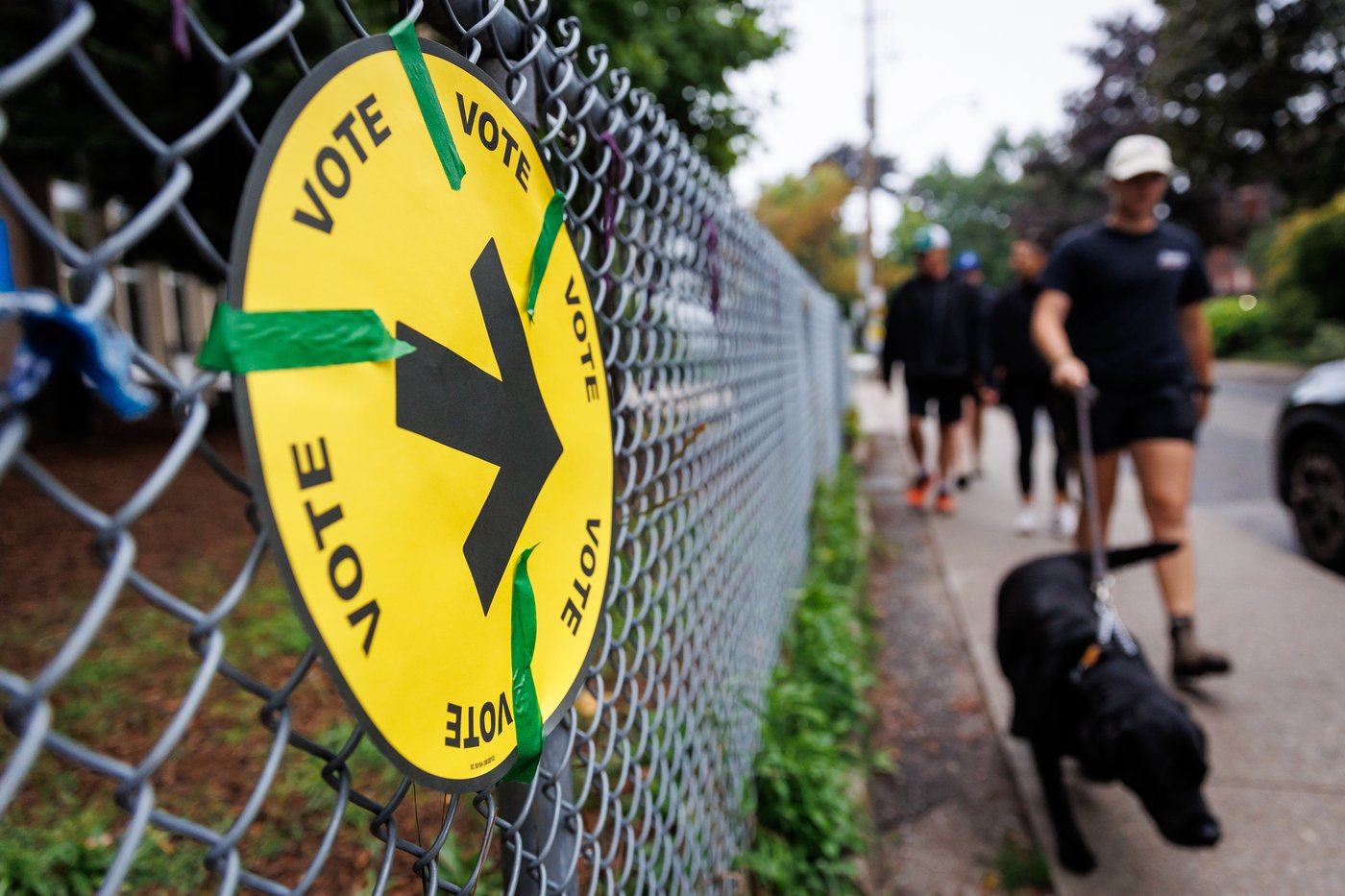
A Statistics Canada study found that people in Canada's Prairie provinces were most likely to feel "not at all hopeful" about democracy, but that perspective didn't have a connection to low voter turnout. Pictured here are Elections Canada signs seen in the Beaches-East York riding in Toronto, on Monday, Aug. 31, 2026. THE CANADIAN PRESS/Keito Newman

Young Canadians less hopeful about democracy: Statistics Canada study

Sep 29, 2026 | 3:21 PM

A study released Tuesday suggests young Canadians are more likely to feel hopeless about the future of democracy in Canada than older residents.

The Statistics Canada study found about a quarter of respondents aged 25 to 44 were “not at all hopeful” when asked to think about the future and about how democracy works in Canada.

In comparison, those 65 and older were more likely to feel very hopeful (about 18 per cent) than not at all (about 10 per cent) about democracy’s functions.

The vast majority of those 15 and older were a little or somewhat hopeful about democracy in the country.

The study used data from a survey series conducted from 2022 to 2024 with a targeted sample size of about 70,000 people about democracy, their confidence in institutions and information, as well as their voting behaviour. The response rate of the fifth and final panel, where the question was asked about hopefulness in democracy, was about 24 per cent.

Respondents were asked to respond to how hopeful they were about certain topics when thinking about the future in Canada, including “the way democracy works in Canada.” They were asked to rate their feelings in one of four categories, ranging from not at all hopeful to very hopeful.

They were also asked about their confidence in institutions and information sources, voting behaviours and political participation.

The report comes as three major votes are set to be held in Canada in October — provincial elections in Quebec and British Columbia and a referendum in Alberta with a question on separation.

The Prairie provinces, including Alberta, had the highest percentage of respondents who felt no hope at all about democracy, about 25 per cent. British Columbia led with those who felt very hopeful, about 15 per cent.

The study didn’t find a link between faith in democracy and voter turnout but says those with no hope were more likely to participate in political activity.

The report also details how non-immigrants reported a less hopeful view on democracy than immigrants and non-permanent residents.

And it suggested that people with better mental health were more likely to feel very hopeful than those who reported poor mental health.

Respondents who said they were not hopeful at all about democracy reported lower trust in scientific experts and civic institutions, like Canadian news media and the justice system, and instead placed their trust in local businesses and police services.

Overall, the more faith respondents had in democracy, the more trust they said they placed on civic institutions, including Parliament and the school system.

This report by The Canadian Press was first published Sept. 29, 2026.

Dayne Patterson, The Canadian Press