Click here to sign up for our free daily newsletter

What the trees are saying about climate change, and how the agriculture sector can listen

Oct 22, 2022 | 9:00 AM

Trees speak to those willing to listen and the Prairie Adaptation Research Collaborative in Regina knows the language.

And the trees are talking about climate change.

Researchers at the tree ring lab within the research collaborative have collected samples of both living and dead trees from across the montane, boreal, and island forests of Alberta, Saskatchewan, the Northwest Territories, northern Montana, and North Dakota to track historical data like droughts, wet seasons, even wildfires.

According to their website, “the inter-annual to multi-decadal variability in hydroclimate recorded by the tree rings informs our understanding of the climate of the western interior, projections of future climate, reference hydrology and climate derived from instrumental records, and conventional water management and planning that assumes a sufficient and stationary water supply.”
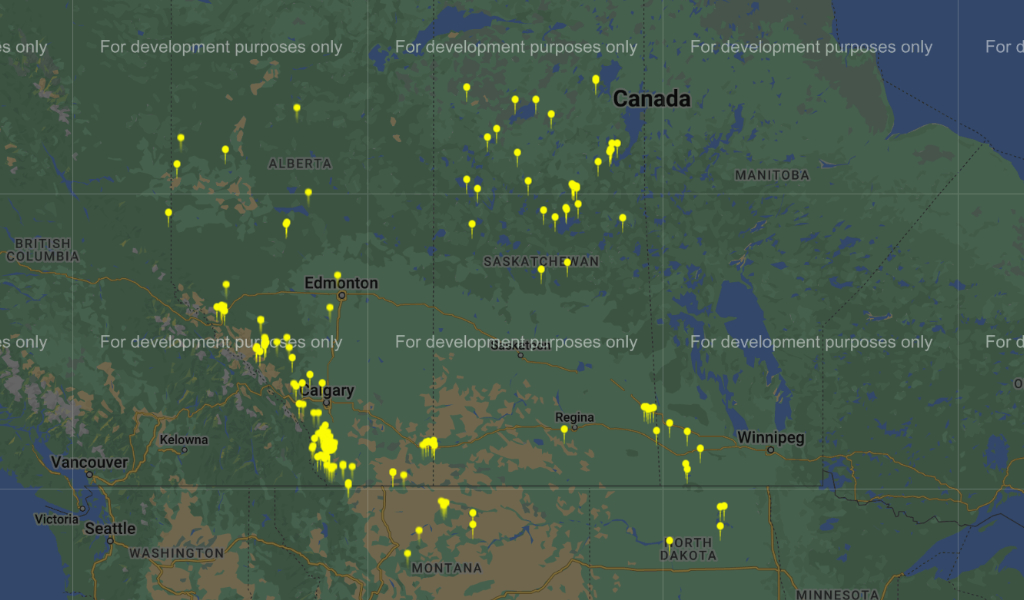
Sample sites across North America tell the story of climate trends across the different regions. (Screenshot/www.parc.ca)

While trees are sensitive to their environments and store that data in their rings, different sectors are becoming more sensitive to climate hazards as well. Collaborative director David Sauchyn said the goal is to use this data to create practical, regionally-focused information so different groups; like municipalities, producers, and resource-based companies can plan for wet and dry seasons and climate disasters.

“Once we’ve determined where they’re vulnerable, where they operate,” Sauchyn told farmnewsNOW, “then we can look at a set of climate variables and extract that information with various sources, including climate models because we have more data for the future, and we can determine what are the risks of climate change that this community, First Nation, business faces as a result.”

Research assistant, Sheena Stewart, told farmnewsNOW that they are able to expand their data through climate oscillations tracking so instead of having a few 100 years of climate data, the lab can track trends going back 1,000 years.

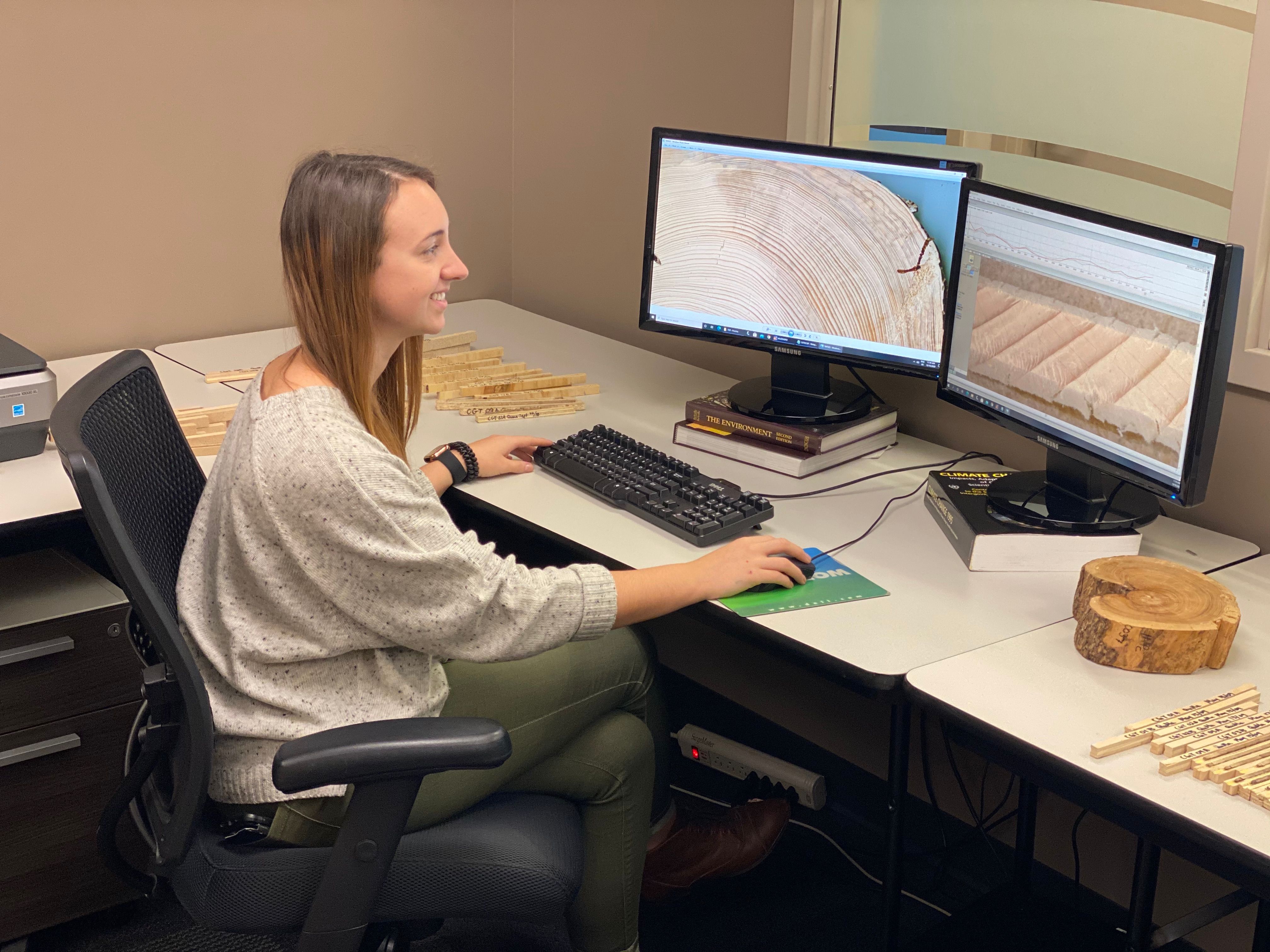
Sheena Stewart works to analyze a tree sample at the Prairie Adaptation Research Collaborative. (Submitted photo/David Sauchyn)

While they track the peaks and valleys of drought and precipitation cycles, there is predictability and knowledge in that information.

“There still is the natural variability, but those natural extremes, or how fast the cycle is that sort of thing, may be changing,” said Stewart.

While we’ve certainly seen some extremes over the last few years, Stewart said these may not be the historical highs or lows people see them as. This could potentially be a sign of worse things to come.

“In our working memory, the worst case scenarios that have come to mind aren’t necessarily the worst case scenarios that have occurred in history, beyond what we’ve been able to record with the instrumental records, and beyond our memory of the people who are living currently.”

More extreme heat can mean a drop in precipitation, said Sauchyn, and for the ag sector, those extremes can be difficult to manage. Pests also like those warmer conditions so Sauchyn is also seeing the increase of disease in those higher temperature trends.

Sauchyn has been a part of the climate change discussion for the last four decades, watching the conversation change from an environmental issue to a social then business issue.

It’s been only recently that adapting to climate change has been on people’s radar.

“People recovered and did things a bit differently but it wasn’t like there is today. All the communities and municipalities, sectors of the economy, everybody’s in the process of developing a plan on how to deal with climate change, and that’s a radical task.”

Education is a huge part of both people’s ability to adapt to climate change and learning how to slow down the process, Sauchyn said, especially since climate change has been and will continue to impact every element of business, agriculture, and the economy. Being a teacher at the University of Regina with a student pool of 14,000, only 10 students a year register for the course. This isn’t good enough, he said.

“We’ve always downplayed the role that knowledge of nature in our environment plays in the planning process. And all of a sudden, with what’s called ESG. environment, social and governance, all of a sudden, we have to educate all these people about the value of the environment, how it works, because it’s never been a part of their education.”

Slowing down climate change is possible, said Sauchyn, but adapting to what is coming is just as important.

becky.zimmer@pattisonmedia.com

On Twitter: @bex_zim