Click here to sign up for our free daily newsletter
Thousands of migratory birds are harvested in Saskatchewan every year by outfitters and hunters. Nature's Food Bank is making sure that meat finds its way to people who need it most. Gary Wurst, Patty Kalytuk and Andrew Wurst are some of the people behind the non-profit. (Image Credit: Brittany Caffet/CKOM)
Traditional food source

Nature’s Food Bank: Turning a problem into protein

Aug 11, 2026 | 10:05 AM

Every fall, thousands of migratory birds fill Saskatchewan’s skies.

Water fowl hunting is a long-standing tradition, one that attracts people from around the world to experience the province’s incredible wildlife. They come prepared for the hunt.

But when the day is over and the birds have been harvested, a question arises: What happens next?
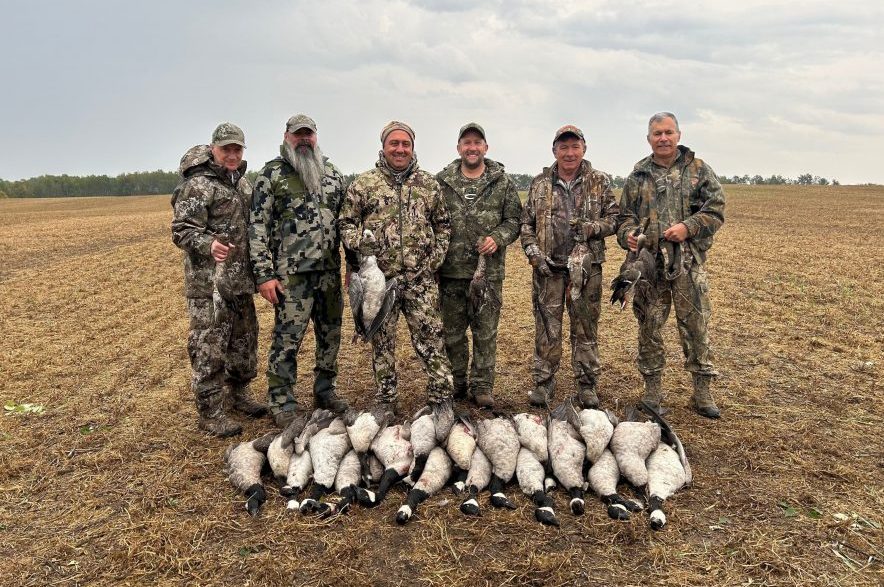
A group of hunters celebrate their harvest with Timberlost Outfitting.
A group of hunters celebrate their harvest with Timberlost Outfitting. (Image Credit: Brittany Caffet/CKOM)

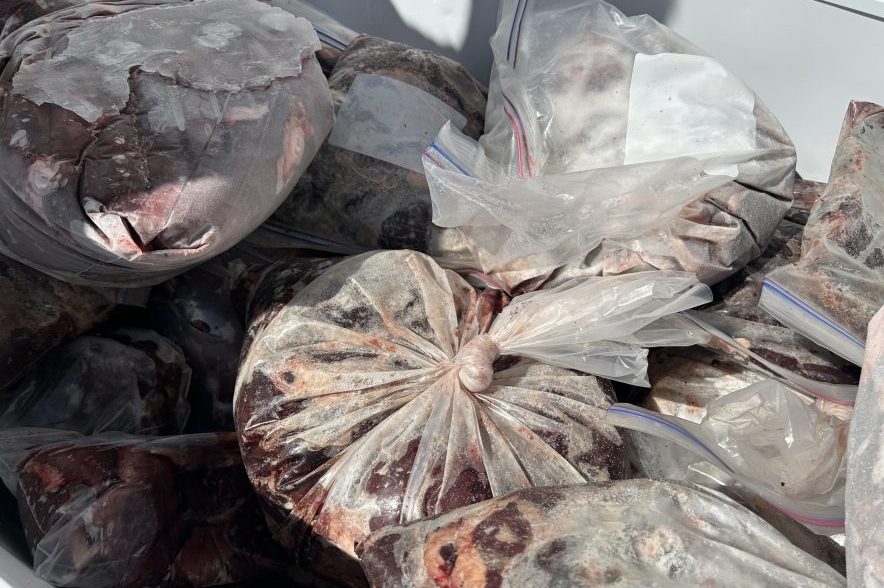
Because of regulations surrounding migratory birds like geese and ducks, many hunters can’t simply pack the meat into their vehicles or onto their flights home. Outfitters can’t sell or barter it. They are left responsible for finding a proper home for thousands of pounds of high-quality protein.

For years, that answer was not always easy to find.

Then came Gary Wurst.

The Saskatoon man was not a hunter. He had never planned to become involved in the world of migratory birds. He wasn’t looking to start a food bank. He was simply scrolling through “For Sale” posts when he saw an unusual offer.

“Years ago, I just saw an ad on Kijiji from an outfitter saying, ‘There’s birds to take for free,’” he recalled. “So I thought, ‘Well, I’ll make jerky for the dogs.’”

What Wurst found was not just a pile of birds. He found a missed opportunity.

Nature’s Food Bank has distributed more than 35,000 pounds of wild goose and duck meat to people in need around the province.
Nature’s Food Bank has distributed more than 35,000 pounds of wild goose and duck meat to people in need around the province. (Image Credit: Brittany Caffet/CKOM)
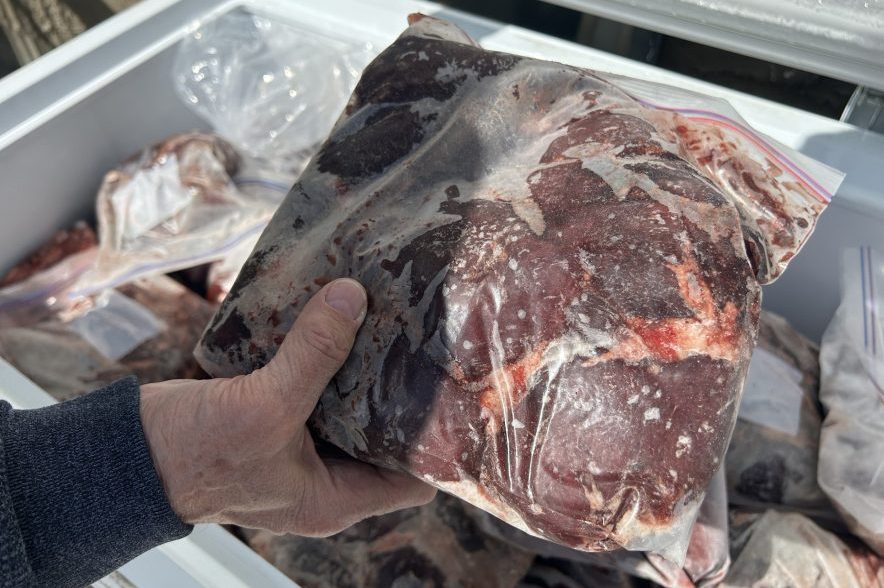
“I realized just how many outfitters there were and what the numbers could be,” he said. “I realized that there was a huge source of protein.”

That realization became Nature’s Food Bank.

Now entering its fourth season, the Saskatoon non-profit has grown from a small experiment into a growing Saskatchewan network.

The organization began in 2023 with two outfitters and about 1,300 pounds of meat. Today, it works with 11 outfitters, has recovered more than 35,000 pounds of meat and supports 15 community organizations across the province.

But even as the organization grows, its roots remain right in Wurst’s backyard.

It is not the kind of backyard most people would expect to find in Saskatoon. No garden beds. No patio furniture. Just rows of deep freezers humming away, holding bags of carefully tracked wild goose meat waiting for their next destination.

“We bring the meat in, put it in these freezers and, as soon as we can, we turn it over and donate it,” Wurst explained.

Because of regulations, every donation must be carefully documented, from the hunter’s information to license numbers and harvest details. It’s a level of accountability that ensures the meat can move safely from the field into the community.

But the freezers are only the middle of the journey. The real impact happens when the meat reaches people.

Andrew Hunter is a board member for the non-profit. A proud Métis citizen, Hunter helps distribute the food throughout the community.

Before joining Nature’s Food Bank, he knew about food insecurity. Seeing the response firsthand changed his perspective.

“I gotta say, it gave me a different view on what they do here,” he said. “The feedback I got from the people, they were so thankful.”

The gratitude is something Wurst sees every time he makes a delivery.

“It makes it all worthwhile,” he said. “People are in line when I get there, and they’re excited.”

Wurst estimates that 85 to 90 per cent of the people receiving the meat are First Nations or Métis. Many already have a connection to wild game as a traditional food source.

And for some people experiencing homelessness or food insecurity, the organization’s jerky program offers something especially practical.

“The thing about the jerky is that it’s a dried meat,” Hunter explained. “A lot of the times, homeless people don’t have access to kitchens.”

Wurst delivers frozen meat to organizations feeding the hungry, and also processes meat into jerky.
Wurst delivers frozen meat to organizations feeding the hungry, and also processes meat into jerky. (Image Credit: Brittany Caffet/CKOM)
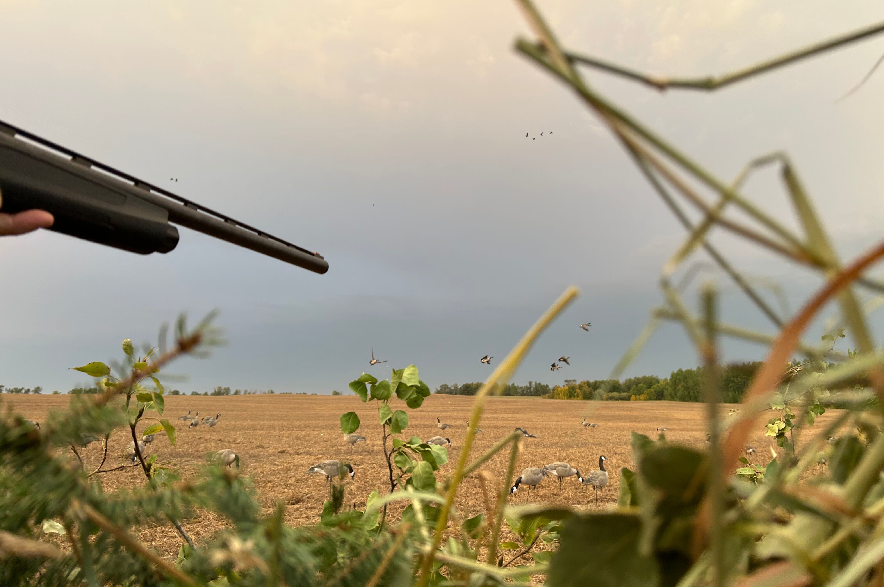
The response from hunters and outfitters has been another reward of the program. They aren’t just relieved to have a responsible place for the meat to go. They’re invested in making sure it continues.

Wurst says the program helps solve a challenge for outfitters, who otherwise spend significant time finding homes for the meat.

Wurst’s partner Patty Kalytuk sits on the board for Nature’s Food Bank. She has seen that appreciation firsthand.

“Last year, some American hunters were moving on. They hadn’t flown in. They were driving, and they had some birds to dispose of. They heard about us, so they asked if we could take them,” she recalled. “We didn’t have any freezer space at the time, so they brought their own freezer and gave it to us and gave us a donation. It was very nice, very nice.”

The backyard freezers that helped launch Nature’s Food Bank are starting to feel a little too small for what the organization has become.

The group’s next goal is to find a permanent home in Saskatoon’s inner city – One with more freezer space, room for processing and a place where people can access the food directly.

“We would like to raise enough money to purchase a property in the inner city,” Wurst said. “So we can distribute from there. Have more room for freezers. Have room for processing, training community members in different food processing things, and just lots of potential.”

Wurst says accessibility is key. Many of the people receiving the meat rely on walking or public transit, so a central location would make the food easier to access.

“We’ve proven that it can work,” he insisted. “It can be scaled up, immensely.”

Nature’s Food Bank is holding its first major fundraiser at the Remai Modern on Aug. 27. Hunting for Hope will include entertainment provided by EMB Productions and a silent auction.
Nature’s Food Bank is holding its first major fundraiser at the Remai Modern on Aug. 27. Hunting for Hope will include entertainment provided by EMB Productions and a silent auction. (Image Credit: Brittany Caffet/CKOM)

As Nature’s Food Bank looks toward the future, the organization is preparing for its first major fundraiser, Hunting for Hope, on Aug. 27 at the Remai Modern. The event will help support its vision for a permanent community space.

But the goal has never been just about finding more freezer space. It’s about building a stronger connection between a resource and the people who need it most.

Birds that once presented a problem now present possibility.

A hunter’s harvest becomes a meal.

And a small idea that began with a Kijiji ad is becoming something much larger: a way for Saskatchewan’s abundance to help Saskatchewan’s people.