Click here to sign up for our free daily newsletter
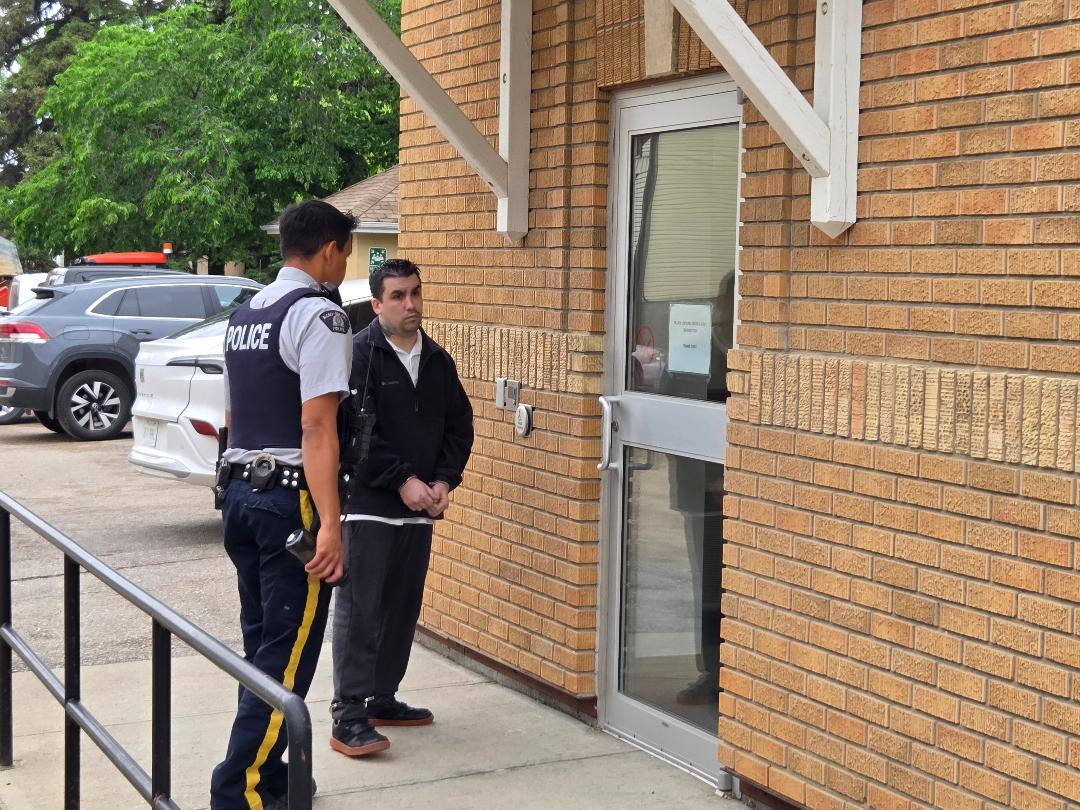
Cody Chubey's fate will be decided in a couple of months. (Image Credit: File photo/northeastNOW)
Verdict reserved

Closing arguments read in Chubey murder case; ruling in December

Oct 8, 2026 | 5:32 PM

A verdict on the Cody Chubey trial will take a little while longer. 

After closing arguments from the defence and Crown, Justice Sean Sinclair announced that his verdict will come Dec. 11. 

The trial began in June and was delayed until October while defence counsel Peter Abrametz sought experts to discuss Chubey’s state of mind when he killed Danielle Dobersheck in the early morning of March 10, 2024, at the Carra Valla Inn in Melfort. 

Abrametz was first to read his closing arguments at Court of King’s Bench Thursday afternoon. 

He said that it was a sad, tragic set of circumstances that brought the case to court. Abrametz argued that his client accepted responsibility for the death of his long-time partner Danielle Dobersheck. 

The main crux of the defence argument against first-degree murder was that Chubey did not intend to cause Dobersheck’s death that day, and that it was not planned or deliberate. As such, Abrametz argued that the incident did not meet the definition of first-degree murder under the Criminal Code, which applies to any murder that is planned and deliberate. 

Abrametz said the main issue at the heart of the case is intent, and he submitted that first-degree murder had not been proven beyond a reasonable doubt by the Crown.

The defence counsel argued that Chubey was extremely intoxicated at the time and had a pattern of alcohol use disorder outlined in the expert report by Dr. Stephen Adams from the University of Saskatchewan. 

Abrametz closed by stating that the intent to cause death was not there in this case and submitted to the court that the verdict should be manslaughter. 

Meanwhile, prosecutor Jennifer Souter told the court that the evidence suggested that Chubey and Dobersheck were in a “toxic relationship”, one fraught with jealousy, insecurity, substance abuse, and control. 

She argued that Chubey fixated on a story that he created: that Dobersheck was cheating on him. There was never any evidence that indicated that Dobersheck was cheating on Chubey. The Crown argued that Chubey was controlling and the allegations against him needed to be viewed within the context of their relationship, and his controlling nature even showed that evening when he drove back from Saskatoon despite being more intoxicated, with him testifying that he was the better driver. 

Souter referenced the testimony of Xaviera Bird that stated Dobersheck did not want to be at the house when Chubey returned from work, and that Danielle had a potential job opportunity in Lanigan and planned to move there. The Crown argued that it shows Dobersheck’s fear of Chubey. Souter also noted the testimony of Danielle’s daughter Daysha, who testified that Chubey yelled at her at their home early in the morning in question upon their return from Saskatoon. 

Also referenced was the audio recorded by Donelle Olafson and her husband, who were staying in the room next to Chubey and Dobersheck. Souter read from the transcripts of that audio, which stated that Chubey was once again referencing Dobersheck’s alleged infidelity during his argument with Danielle. The accused was heard yelling ‘you’re going to die if you don’t tell me’, as Chubey was seeking the name of the person Dobersheck believed she was cheating with. The recording, according to the Crown, indicated that Dobersheck sounded terrified, and she repeatedly denied the allegation. 

Souter said Chubey’s testimony was neither credible nor reliable, and “should be rejected.” She said, “drunken intent is, nonetheless, intent.” 

Regarding Chubey’s intoxication level at the time of the incident, the Crown argued that officers at the scene believed the accused was between a four and a seven on a drunkenness scale of one to 10, with 10 being completely incapacitated. Cpl. Janelle Samoila, who processed Chubey just after 8:30 that morning, noted that Chubey was cooperative with instructions and was not slurring or stumbling. The Prosecutor indicated that there was no evidence of how much Chubey drank, nor was there a blood alcohol content test performed. 

The Crown argued that Chubey’s testimony was self-serving and had tones of obsession, ownership, and jealousy.  

Souter claimed that first-degree murder was the proper ruling, citing Dobersheck’s forcible confinement in both the hotel room and, as the assault escalated, the bathroom. However, after the Crown’s closing argument closed, Abrametz said the cases cited by the Crown regarding forcible confinement were not applicable in this case, as they differed significantly from this incident. 

—

cam.lee@pattisonmedia.com