Click here to sign up for our free daily newsletter
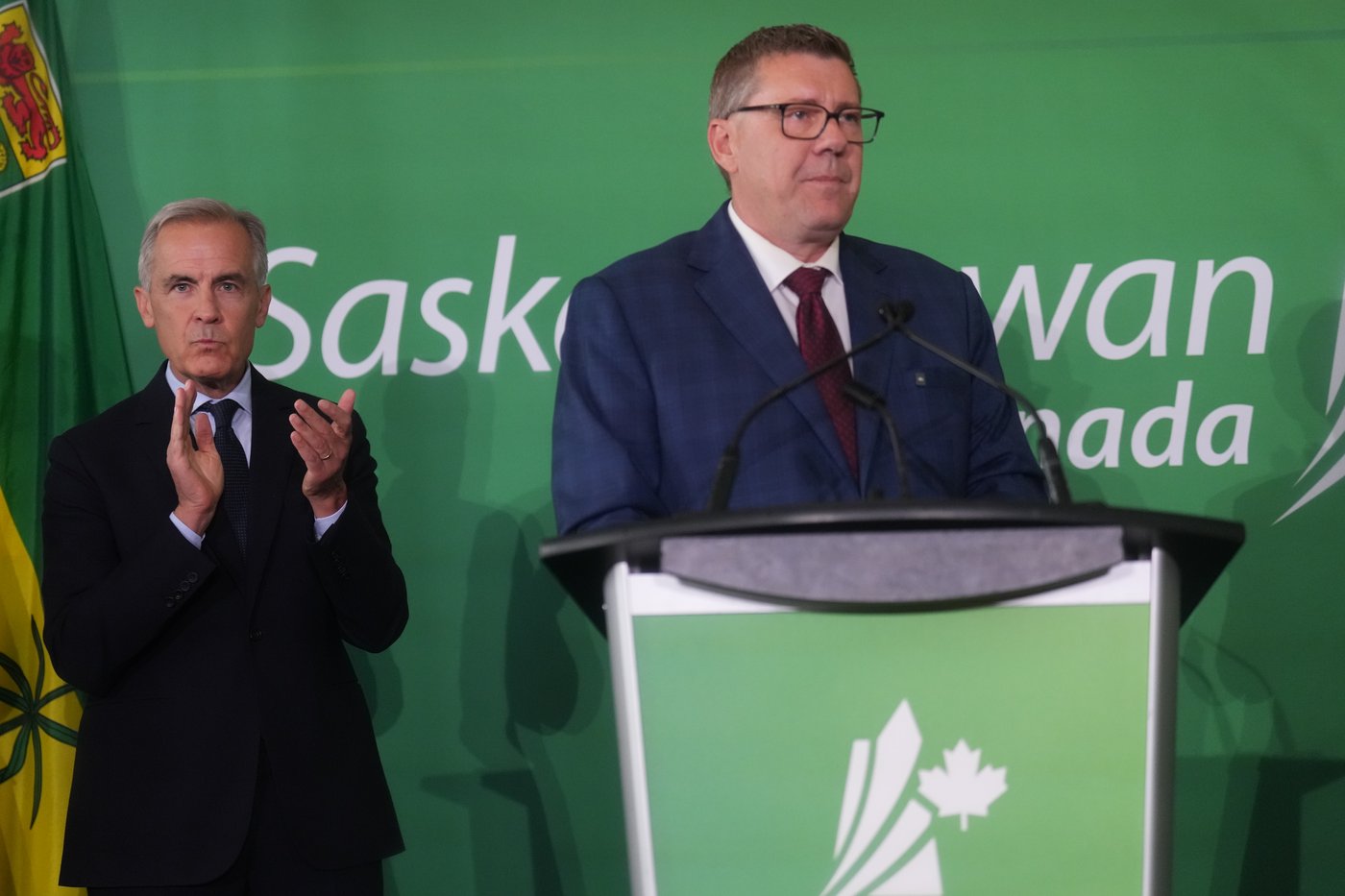
Prime Minister Mark Carney, left, applauds as Saskatchewan Premier Scott Moe speaks at Canada's national investment summit, in Toronto, on Monday, Sept. 14, 2026. THE CANADIAN PRESS/Nathan Denette

Trump says U.S. to continue buying Canadian potash but wants cheaper price

Sep 22, 2026 | 2:27 PM

NEW YORK — U.S. President Donald Trump says his country will continue buying Canadian potash after all.

Trump made the comments to reporters Tuesday during a bilateral meeting at the United Nations General Assembly with Ukrainian President Volodymyr Zelenskyy.

It comes a day after Trump said he was working on a deal to buy cheaper potash from Belarus in a bid to lessen the United States’ dependence on Canada.

“Belarus has a lot of potash, and our farmers need good prices, and we want to get a lower price,” Trump told reporters when asked about the proposed deal.

“We’ll continue to go with Canada, but Belarus would like to sell it for a much lower price.”

Canada is the world’s largest producer of potash, a key component of fertilizers, and the United States is its biggest customer.

Asked about Trump’s comments, Prime Minister Mark Carney told reporters at a separate news conference that Canada’s potash is reliable and cost-effective.

He said Canada will continue to supply the United States with potash and that there’s an opportunity for both countries to grow the fertilizer industry together.

“That would be good for Canadian farmers, it would be great for American farmers,” Carney said.

All of Canada’s potash is produced in Saskatchewan.

On Monday, Saskatchewan Premier Scott Moe condemned Trump’s initial comments, saying Belarusian potash is unethical due to the country’s involvement in Russia’s invasion of Ukraine.

Industry leaders and economists have also questioned how the United States could get cheaper potash from Belarus when Canada is much closer and has reliable supply-chain infrastructure.

Belarus President Alexander Lukashenko has also said his country has limitations, saying it can’t supply the United States with large volumes of potash.

This report by The Canadian Press was first published Sept. 22, 2026.

– By Jeremy Simes in Regina

The Canadian Press