Click here to sign up for our free daily newsletter
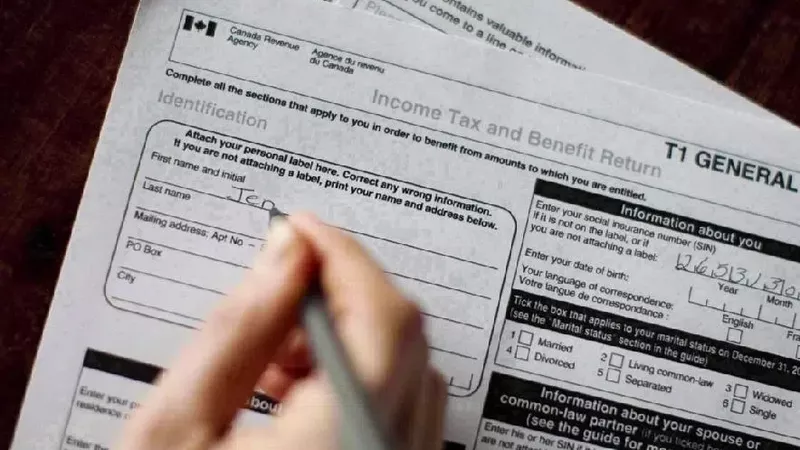
Some Saskatchewan residents could seen some increases in their tax credit amounts, due to The Saskatchewan Affordability Act and annual inflation indexing, according to the provincial government. (980 CJME file photo)
Employment and Affordability

Sask. residents to see improved work conditions, tax savings due to law changes

Jan 1, 2026 | 12:06 PM

As the calendar flips over to 2026, the Government of Saskatchewan says a number of legislative and tax changes are expected to keep more money in the pockets of residents, especially the lowest earners.

The new year will bring some changes in legislation around the Employment Act and The Saskatchewan Affordability Act, according to the provincial government.

Some of the changes to the Employment Act include:

  • letting employers use a calendar day rather than 24 consecutive hours to schedule work and overtime hours;
  • forbidding employers from keeping tips from their employees;
  • increasing the limit for when employers must notify employees, the minister and any unions of a group termination from 10 employees to 25 employees;
  • restricting when employers can ask for sick notes;
  • giving the director of employment standards the authority to order reinstatement and compensation for lost wages in cases of when an employer conducts discriminatory action; and
  • lengthening various leave arrangements.

The duration of long-term sick leave has also been extended from 12 to 27 weeks, which the ministry said aligns with federal insurance benefits and provides additional job protection to employees who are receiving benefits.

Additionally, maternity leave is being extended to employees who experience a loss of pregnancy “up to 20 weeks before the estimated due date.”

Employees experiencing interpersonal violence are now offered 16 weeks of unpaid leave, in addition to the existing 10 day leave (five days paid and five unpaid).

Bereavement leave has also been extended “to allow the leave within six months of a death rather than a week before or after the funeral, permitting leave for the death of a person the employee considers to be ‘like’ family and for the loss of a pregnancy of an employee or an employee’s immediate family.”

Another change means part-time employees “can participate in modified work arrangements where overtime is paid after the working hours established in the work schedule as opposed to the existing eight hours in a day.”

Employers in the retail sector will no longer be required to give workers two consecutive days off each week, which the ministry said brings retail into line with other sectors, “which must provide one day off.”

Additionally, the amendments mean that employers with non-unionized employees can apply to the director of employment standards “for a variance from the meal break and notice of work schedule change provisions, with the written consent of the employees.” Unions can also negotiate variances from the provisions directly with the employer without needing to go to the director for approval.

Other changes include “clarifying that employees can be paid their wages in cash,” and a further clarification saying employers do not have to provide vacation pay on the period where pay-in-lieu of notice is being provided.

Complete details of the changes can be found on the Government of Saskatchewan’s website.

Income tax changes

Some Saskatchewan residents could see some increases in their tax credit amounts due to The Saskatchewan Affordability Act and annual inflation indexing, which adjusts taxation rates in accordance with inflation in order to avoid driving people into higher tax brackets, according to the Government of Saskatchewan.

This increase in tax credits is part of a four-year income tax reduction plan which the government touts as the “highest tax-free income tax threshold in Canada.”

The government also income tax changes in 2026 will “provide Saskatchewan residents $42 million in tax savings in the coming year that would have occurred as a result of inflation.”

“This preserves the real value of the amount all taxpayers can earn without paying tax, particularly benefiting those on fixed incomes,” the government added.

The amount individuals can earn before taxes are applied will go up to $20,381 for 2026 from $19,491 in 2025. The government said this increase is part of the plan to add $500 each year to that amount and other personal credits through to 2028, plus inflation adjustments.

Other personal tax credits, including spousal, dependent child and senior supplementary amounts, will also see the same $500 raise, in addition to indexation for the 2026 tax year, as the Sask. Party promised during the recent provincial election campaign.

The Saskatchewan Low-Income Tax Credit, which is designed to help the province’s lowest earners, will go up by five per cent for the year as part of a four-year enhancement plan.

Federal income tax brackets and the level of income a person can earn before taxes are applied by Ottawa are also indexed to inflation (two per cent for 2026) and the lowest federal tax rate drops to 14 per cent in 2026, the province noted in a statement.

The government said these tax credits are “aimed at helping with affordability and are also increasing, including the Low Income Tax Credit, the Disability Tax Credit and supplement, the Caregiver Tax Credit, Personal Care Home Benefit, Active Families Benefit, First-Time Homebuyers Tax Credit and the Graduate Retention Program.”

“We recognize that rising costs are challenging, and we remain committed to providing affordability relief for residents,” Jim Reiter, Saskatchewan’s finance minister, said in a statement.

“Annual indexation, combined with the income tax measures in this year’s budget, help to keep Saskatchewan among the most affordable places to live in Canada.”

Saskatchewan Chamber of Commerce response

On Dec. 4, the Saskatchewan Chamber of Commerce submitted its review of the labour relations provisions of The Saskatchewan Employment Act.

In the report, the Chamber recommended the Act be updated to clarify matters, such as, “how to conduct representation votes for remote or multi-site workforces; what constitutes access to employees for communications in digital workplaces; and how notice requirements apply when workers are geographically dispersed.”

The Chamber made 10 recommendations for the ministry, including: to “maintain an employer’s ability to bring in replacement workers, make the provincial construction collective agreements either opt-in, or opt-out, for unionized businesses in the construction industry and provide clear, plain-language guidance on lawful communication during organizing drives.”