Click here to sign up for our free daily newsletter
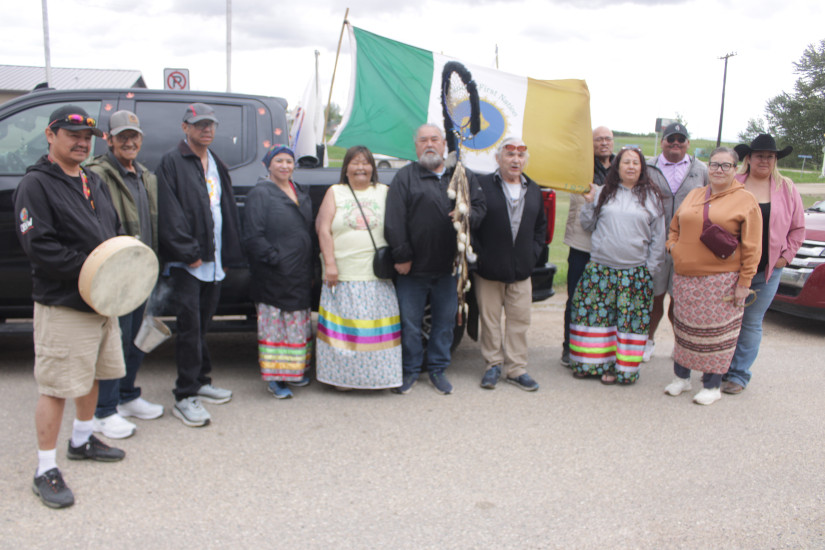
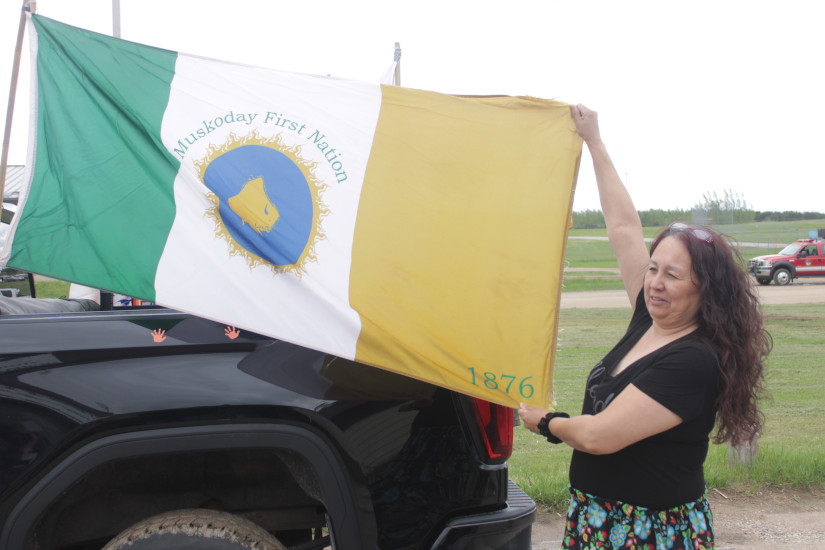
The fourth annual Fentanyl and Crystal Meth Awareness Walk left Muskoday First Nation Monday morning. (Image Credit: Nigel Maxwell/ paNOW Staff)
"They are not alone."

Muskoday First Nation begins 400-km walk to spotlight addictions crisis

Jun 8, 2026 | 5:00 PM

With an Eagle Staff in hand and accompanied by two members of a local drum group, Muskoday First Nation Chief Ron Bear led a small procession of supportive band members from the hall to Highway 3 South, beginning a nearly 400-kilometre journey aimed at inspiring change. 

The fourth annual Fentanyl and Crystal Meth Awareness Walk left the community Monday morning and is expected to reach the Legislative Building in Regina sometime next week. 

“Like any other community, we are suffering from addictions,” Chief Bear said. “So we just want to create greater awareness and try to get the help and services that are needed for our people.” 

Bear said discussions about a local treatment centre are underway, but funding must be secured first. The centre would be culturally sensitive and allow band members to remain close to home. 

“There’s been lots of drug use and drug dealers coming into the community, and we are trying to put a stop to all these things that are going on. By creating this awareness, we’re hoping to curb some of those situations from happening.” 

Coun. Elwin Bear said everyone needs to get on board for the effort to succeed. 

“Not just a First Nations look, not just a provincial look, not just a federal look, but a whole-of-society look at this and come up with an action plan,” he said. He added the plan must also include speaking directly to people struggling with addictions and asking what supports they want. 

“We have the negative people who say, ‘Let them be.’ Well, no, we can’t let them be…as we’re taught under the foundational pieces, everyone is a child of the Creator.” 


(Image Credit: Nigel Maxwell/ paNOW Staff)

Betty Prosper and Erica Hennie organized the original walk four years ago. Hennie said they have made a difference, opened eyes and are looking forward to once again stopping in various communities. 

“Because each community has an addiction issue, multiple overdoses, we’re just trying to let them know they are not alone,” she said. 

“You can’t help them all, but it matters to the ones you can help.” 

One of the walk’s biggest supporters was former Kawacatoose band councillor Thomas “Bud” Dustyhorn, who died last January. Prosper said organizers plan to hold a special award ceremony in his honour this September.

“Anything that could go wrong, he was there helping us,” Prosper said. “He supported us when we had a flat tire or anything, and he was really funny and treated us all with respect.” 

Nigel Maxwell/ paNOW Staff

Dustyhorn’s daughter, Larrisa Thunderchild, drove from Kawacatoose to Muskoday and plans to rejoin the group when it arrives in Regina. She spoke about losing her younger sister to an overdose. 

“It still does affect us to this day, you know, when people ask what happened or how we are dealing with it …day by day.” 

Saskatoon Tribal Council Chief Mark Arcand said the walk is an opportunity to educate people who do not understand that when a family is dealing with addiction, it is lived firsthand. 

“In my mind, this is a pandemic, and we are not able to fix everything right now because it’s just out of control.” 

Independent MLA Betty Nippi-Albright said there needs to be a major expansion of voluntary in-patient treatment spaces, including long-term treatment, medical detox and sober-living homes. 

“We need wraparound supports because people need to deal with their harms and the trauma they have lived through.” 

Recently passed government legislation, The Compassionate Intervention Act, allows for involuntary addiction treatment. Nippi-Albright said the act, which aims to support people with severe addictions who are not capable of seeking help despite serious health and safety risks, is why she left the NDP. She is a former addictions counsellor with a master’s degree in political studies. 

“What I saw in that bill is going to do more harm than create help for people.” 

She said anyone detained and released has a 70.5 per cent chance of overdosing again. She added people with no prior criminal record who try to flee after being forced into treatment could potentially be criminalized. 

“These are going to be warehouses where no supports are going to be available,” she said. 

nigel.maxwell@pattisonmedia.com

On X: @nigelmaxwell