Click here to sign up for our free daily newsletter
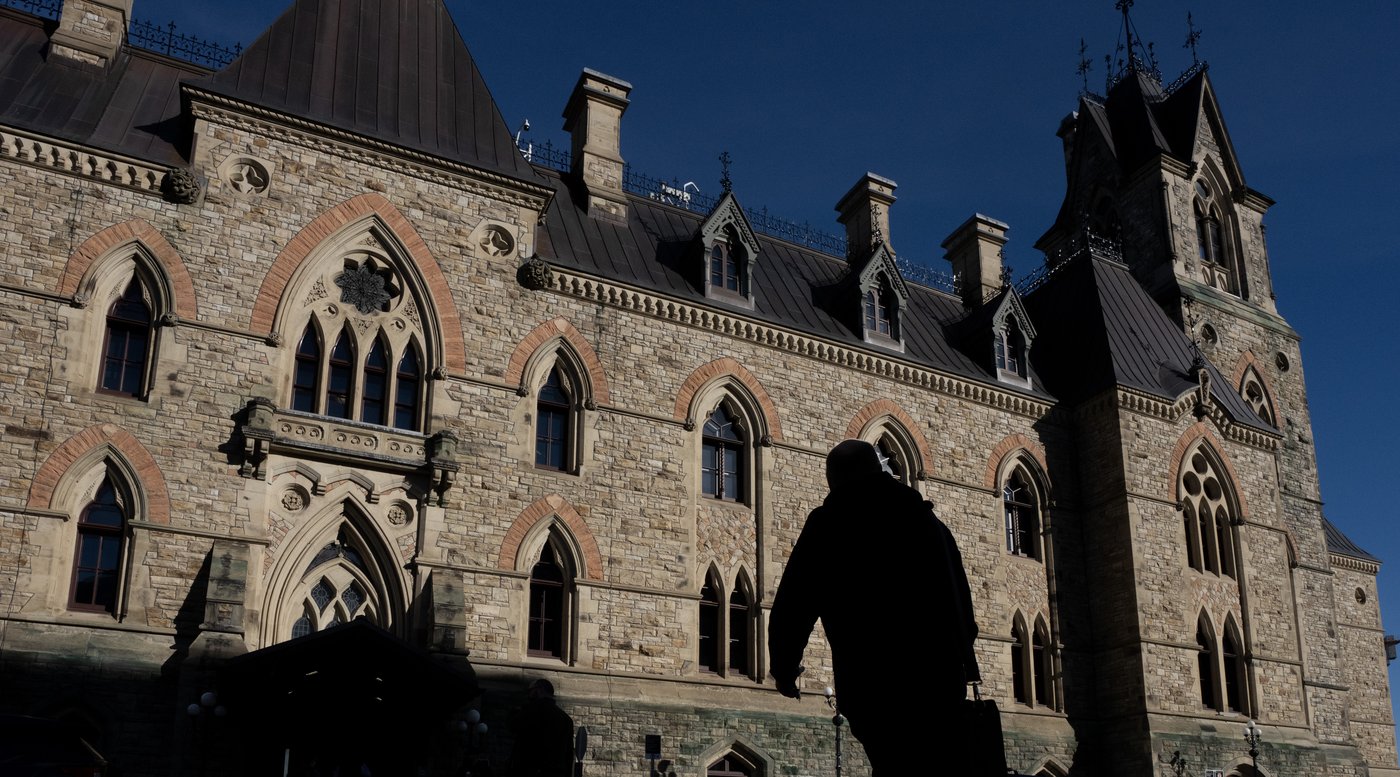
A person is silhouetted against West Block as Parliament returns following the summer recess in Ottawa, Monday, Sept. 21, 2026. THE CANADIAN PRESS/Adrian Wyld

MPs split on whether AI should be used in House of Commons

Sep 25, 2026 | 1:53 PM

OTTAWA — Members of Parliament are split on whether — and how — artificial intelligence should be used by lawmakers following a report that said the technology is being used to write a significant amount of what MPs say in the House of Commons.

The Economist reported this week that as much as 20 per cent of what was said on the floor of the House of Commons in late 2025 was flagged as AI-generated.

The publication studied comments, speeches and questions from MPs of more than 100 words, as recorded in Hansard, and ran them through the AI detector tool Pangram.

It compared the results from different countries, including legislatures in the United Kingdom, Australia, New Zealand and the United States, and found Canada had the second-highest rate of AI use.

Some MPs in Ottawa flatly denied using AI tools to generate what they say in Parliament, while others said it can be useful for research.

“I think everybody’s using artificial intelligence,” said Conservative MP Sandra Cobena, who called it a great research tool but said it has to be used with care.

She said the Conservative party does not have specific rules on the use of AI to generate speeches or comments for MPs but “it is expected that everybody uses it responsibly.”

“Of course parliamentarians are using it,” she said.

Her caucus colleague Luc Berthold agreed its use is widespread and said he uses it for research.

“If the sentence is really good, I will probably put it in and use it,” he said.

But the technology usually can’t capture the way he wants to express himself, he added.

“Quebecers, we have a lot of emotion, and AI doesn’t have any,” he said.

Liberal MP Greg Fergus said he’s “an analog man” and he wouldn’t know how to use the technology.

“For actually creatively engaging, in a place where we’re supposed to be talking about our laws and representing our folks, no, I don’t think it’s useful,” he said.

Liberal MP Anthony Housefather said he would prefer it if MPs weren’t using AI-generated text but he doesn’t have an issue with it.

Fellow Liberal Ben Carr also said he’s not a user of AI because he wants to speak in his own voice.

He said that while he thinks using AI to generate an entire speech would be “somewhat problematic,” there’s nothing wrong with using it to collect your thoughts.

“We want people to be representing their communities as best as they can. And it doesn’t mean that you can’t represent your community by using the assistance of artificial intelligence to generate your thoughts and your views and your perspectives,” he said.

A spokesperson for the Prime Minister’s Office said neither the prime minister nor members of his office use AI to generate statements or responses delivered in the House of Commons.

Conservative MP Scott Reid said he used the tool on Friday to find information quickly in the middle of question period.

Reid said a Liberal member across the aisle was “heckling so loud that I could barely hear myself think” as he asked a question. Reid said he consulted AI to ask which Standing Order — the rules that govern the House of Commons — would be violated by the interruption so he could report that to the clerk.

The Green Party said its MPs are independent and party rules don’t allow the leader or anyone else in the party to dictate how a member carries out their duties.

“(Leader) Elizabeth (May) herself is very concerned about artificial intelligence and is deeply committed to avoiding AI in both her personal life and her role as an MP,” said party spokesperson Bianca Crêtes.

A spokesperson for the New Democrats said the party is developing a policy on AI usage for MP offices and is working with the union that represents its parliamentary staff.

This report by The Canadian Press was first published Sept. 25, 2026.

Sarah Ritchie and David Baxter, The Canadian Press