Scientists targeting troublesome weeds with unique methods
-
Share on Facebook
-
Share on Bluesky
-
Share on X
- Copy Link
What if a simple kitchen staple like baking soda could help Canadian farmers tackle stubborn weeds?
Agriculture and Agri-Food Canada (AAFC) research scientist, Dr. Andrew McKenzie-Gopsill recently completed research that explored an alternative method for controlling weeds.
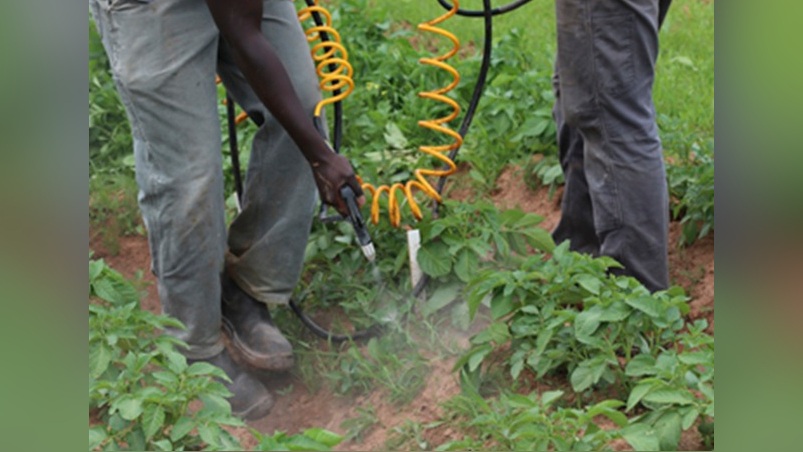
He investigated a technique called abrasive or projectile weed control. Using a sandblaster, McKenzie-Gopsill shot natural materials like corn cob grit and baking soda at weeds and found that they can knock back even the most stubborn plants, like lamb’s quarters and wild buckwheat, without damaging potato plants or reducing potato yields. It provides farmers with new tools for fighting invasive weeds in high value crops where herbicides are becoming less effective due to resistance.
Early research for the project combined abrasive grits, like corn cob, with reduced herbicide rates. The simple idea was to weaken weeds with a blast of grit, then finish them off with herbicide. While it worked, it came with a catch. Using lower herbicide rates can actually encourage herbicide resistance. That’s a risk that Canadian farmers and weed scientists have spent decades trying to avoid.


