Click here to sign up for our free daily newsletter
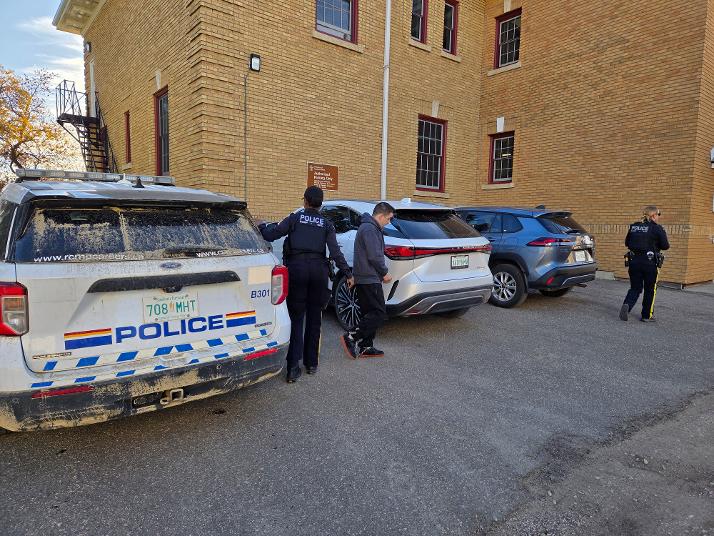
Cody Chubey outside Court of King's Bench in Melfort. (Image Credit: Cam Lee/northeastNOW)
Closing arguments Thursday

Testimony wraps up at Chubey murder trial in Melfort

Oct 7, 2026 | 2:41 PM

Final arguments in the Cody Chubey murder trial in Melfort will be heard on Thursday. 

Defense counsel Peter Abrametz rested his case on Wednesday, with the accused taking the stand in the morning. 

Chubey testified that he was responsible for the death of his long-time partner Danielle Dobersheck at the Carra Valla Inn in Melfort in March of 2024 but had no memory of the incident. Court heard that Dobersheck was beaten to death with a snow shovel inside their room at the motel. 

The two had gone to Saskatoon the day earlier to have a date. Chubey described going to various locations in Saskatoon, including a liquor store and a restaurant in which they had some drinks. The two even got tattoos bearing each other’s names during their time in Saskatoon; Chubey’s being on his neck and Danielle’s being on her chest. 

Despite driving back from Saskatoon, Chubey testified that he was intoxicated to the point of having a blackout.  

He maintained that he cannot remember anything between the time just after the two left Saskatoon to when he woke up in a cell in Melfort when an officer told him he was in there for the aggravated assault of Dobersheck. Chubey said he didn’t learn about the manslaughter upgrade until the next day. 

Chubey said during defense questioning that he takes full responsibility for Danielle’s death and hopes that one day his family can forgive him. 

During the Crown’s cross-examination, Chubey said he blacked out between 20 and 30 times between March 2023 and March 2024. The accused went to treatment twice but admitted his lifestyle of drinking and doing drugs took over. 

The Crown asked Chubey whether he had any memory from the night in question, whether in whole or in fragments, and he said he did not. He maintained he had no memory of the RCMP officers coming to his room, being in the back of their patrol car, or being booked and put into a cell.  

Crown prosecutor Jennifer Souter told Chubey that officers at the scene believed his level of intoxication was anywhere from a four to a six on a scale of one to 10, with Cpl. Janelle Samoila testifying that she did not notice intoxication, noting that he did not slur or stumble when she processed him early the next morning. Chubey’s response was that it was merely their opinion, and that he maintained that he was blackout drunk and did not remember the night and early morning in question. 

Chubey rejected the Crown’s assertion that Danielle was different around him than she was around others, and that he didn’t believe she was afraid of him. When Souter read transcripts of the audio played earlier in the trial of Dobersheck screaming and begging Chubey to stop, she asked if Danielle sounded scared then. He quietly answered ‘yes’. 

The Crown also noted that Chubey was able to beat Dobersheck to death and was aware enough to stop striking her when she stopped screaming, attempting to cast doubt on his blackout assertion. 

After Chubey stepped down from the witness stand, a Voir Dire was held to discuss a Defense report from University of Saskatchewan psychiatric expert, Dr. Stephen Adams. Justice Sean Sinclair ruled the report could be submitted as evidence, though only as to his area of expertise, which is psychiatry. 

Court was then dismissed, and closing arguments will begin at Court of King’s Bench in Melfort Thursday at 2 p.m. 

NEOSS PRESENCE 

Throughout the trial, staff from North East Outreach and Support Services (NEOSS) have been in the gallery to take in the proceedings. Not only does the organization run a women’s safe shelter in Melfort, but many employees were also friends and colleagues with Danielle Dobersheck, who worked at the TreeHouse emergency receiving home for children. 

NEOSS Outreach Worker Tracey Zwozdesky told northeastNOW that they wanted to be at the trial to show their support to Danielle and her family. 

“We see domestic violence every day, and it impacts us knowing that we didn’t know the full extent of what Danielle was living in and living through,” Zwozdesky said. 

She said it was important for the staff to show their support by being in the gallery, whether they knew Danielle personally or not. Some of those who have been attending the trial didn’t even work with NEOSS when Danielle was in the organization, but Zwozdesky said it was important for them to be present in the courtroom. 

“I just think it’s so important that we’re all here and we’re showing that support, and that we’re here for the family.” 

– 

cam.lee@pattisonmedia.com