Click here to sign up for our free daily newsletter
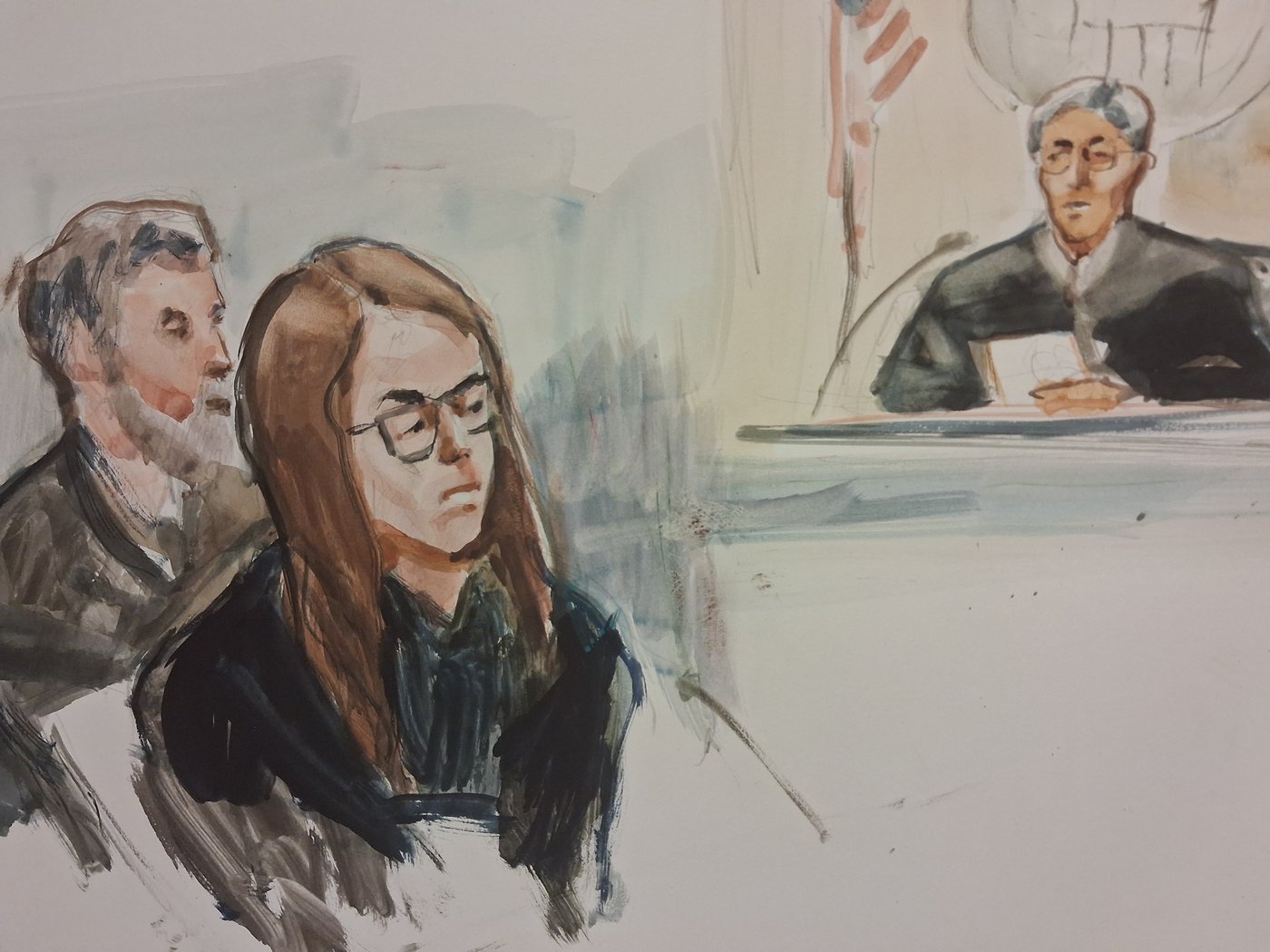
James Cody Bryant, centre, is seen in a court sketch drawn during the accused's appearance in U.S. district court in Seattle on Tuesday, Oct. 6, 2026. THE CANADIAN PRESS/Lois Silver

U.S. court denies bail to alleged Tumbler Ridge shooting conspirator James Bryant

Oct 13, 2026 | 4:03 PM

SEATTLE — The suspect who allegedly colluded online with the killer before the mass shooting in Tumbler Ridge, B.C., was denied bail on Tuesday in a Federal Court in Seattle, Wash.

The U.S. district court for the Western District of Washington ordered James Bryant be detained, Emily Langlie with the Department of Justice said in a statement.

Bryant is accused of conspiring with Jesse Van Rootselaar online, allegedly providing guidance and financial support as the teenage shooter revealed plans for the massacre over months of communications.

Federal prosecutors successfully argued to keep Bryant in custody, alleging in a written submission that the resident of Bellingham, Wash., “helped plan a mass murder over the course of several months” and would present a danger to the community if released.

Prosecutors filed a memorandum with the court that said Bryant’s communications with Van Rootselaar included messages expressing “disapproval” of the teenage shooter’s attack plans.

But Bryant allegedly promised not to “snitch,” which favoured the denial of bail, the document said.

“Anyone whose character allows them to help plan a mass shooting and then sits back and (literally) tries to watch as schoolchildren are murdered, instead of ‘snitching’ on the killer, is a danger to the community and should be detained pending trial,” the memo said.

Van Rootselaar killed her mother and brother on Feb. 10 this year then drove to the high school where she murdered five students and an education assistant before killing herself.

The document said Bryant’s communications were primarily online, and said no release conditions could be enforced to “ensure that Bryant does not pose continuing threat to the community through online behaviour.”

Bryant’s public defender lawyers Dennis Carroll and Gregory Murphy referred to Bryant by female pronouns and in documents indicated that she goes by the name Melody.

They argued in a written submission that Bryant should be released because she has no criminal record, and has stable housing and employment and “strong community ties.”

The defence response to the government’s detention memo said the evidence against Bryant is “hard to assess,” because much of it includes a “voluminous” number of online messages exchanged over the Discord platform that have not been disclosed.

The response said law enforcement has had much of that evidence in its possession for seven months before Bryant’s arrest.

“Then, for seven months, investigators left Ms. Bryant in the community without any restrictions on her movement or access to the internet,” the document says.

The response said Van Rootselaar also shared “violent fantasies” with ChatGPT, and its developer OpenAI didn’t alert law enforcement.

Several lawsuits have been filed against the artificial intelligence firm in connection with the mass shooting, but Bryant’s response said “as the absence of criminal charges against ChatGPT demonstrates, refusing to prevent another person from committing a crime does not establish agreement with that conduct.”

The response said the First Amendment also “protects awful speech, even when it incites non-imminent violence,” while claiming Bryant does not abuse drugs or alcohol, nor have any mental health issues to justify continued incarceration.

“There is no reason to suspect that Ms. Bryant has chatted, or could chat, with another person planning another horrifying crime. Indeed, if that danger were real, the government would not have left Ms. Bryant in the community for seven months before arresting her.”

Bryant, the response said, voluntarily met with investigators and there’s no evidence she “initiated the planning or engaged in any violence” in relation to the attack that left eight victims dead, and instead “repeatedly tried to dissuade Van Rootselaar from committing mass murder.”

Bryant’s lawyers said Bryant should have been released on conditions, including house arrest, a mental health assessment and “strict” limits on internet use.

“As horrible as Van Rootselaar’s crimes were, and as cold as many of Ms. Bryant’s chats appear, there is no evidence — much less clear and convincing evidence — that she would pose an unmitigable danger to the community,” the response said.

Bryant’s public defender, Dennis Carroll, was not immediately available for comment on Tuesday.

This report by The Canadian Press was first published Oct. 13, 2026.

The Canadian Press