Click here to sign up for our free daily newsletter
French-immersion teacher and documentary filmmaker Wahbi Zarry, who developed a free online Nakoda classroom lesson with Carry the Kettle educator Theresa O’Watch, works behind the camera in an undated photo. (Image Credit: Wahbi Zarry/submitted)
Ába wašté!

From hello to goodbye, new free lesson introduces Sask. students to Nakoda

Sep 16, 2026 | 3:39 PM

Saskatchewan’s Nakoda curriculum already exists. What is often missing, teacher and filmmaker Wahbi Zarry says, is someone in the school who can speak the language.

Beginning Monday, a free online lesson will try to bridge that gap by bringing a Nakoda teacher from Carry the Kettle Nakoda Nation onto classroom screens.

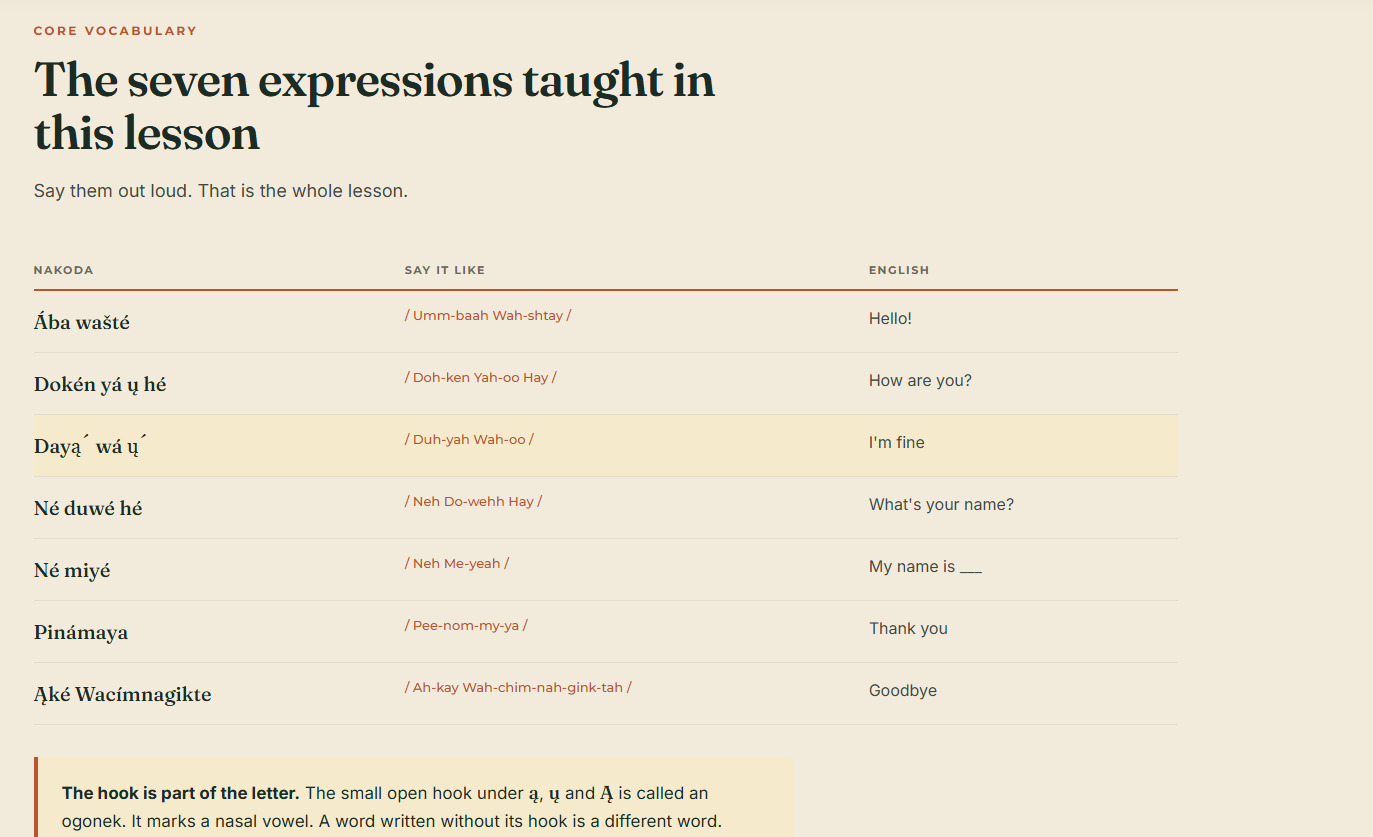
Theresa O’Watch leads students through seven introductory expressions, from hello and “How are you?” to names, thanks and goodbye. The classroom teacher does not need to speak Nakoda, create a lesson plan or register for an account.

“You print them, you press play, and you have a full 30-minute class, free, no account,” Zarry said.

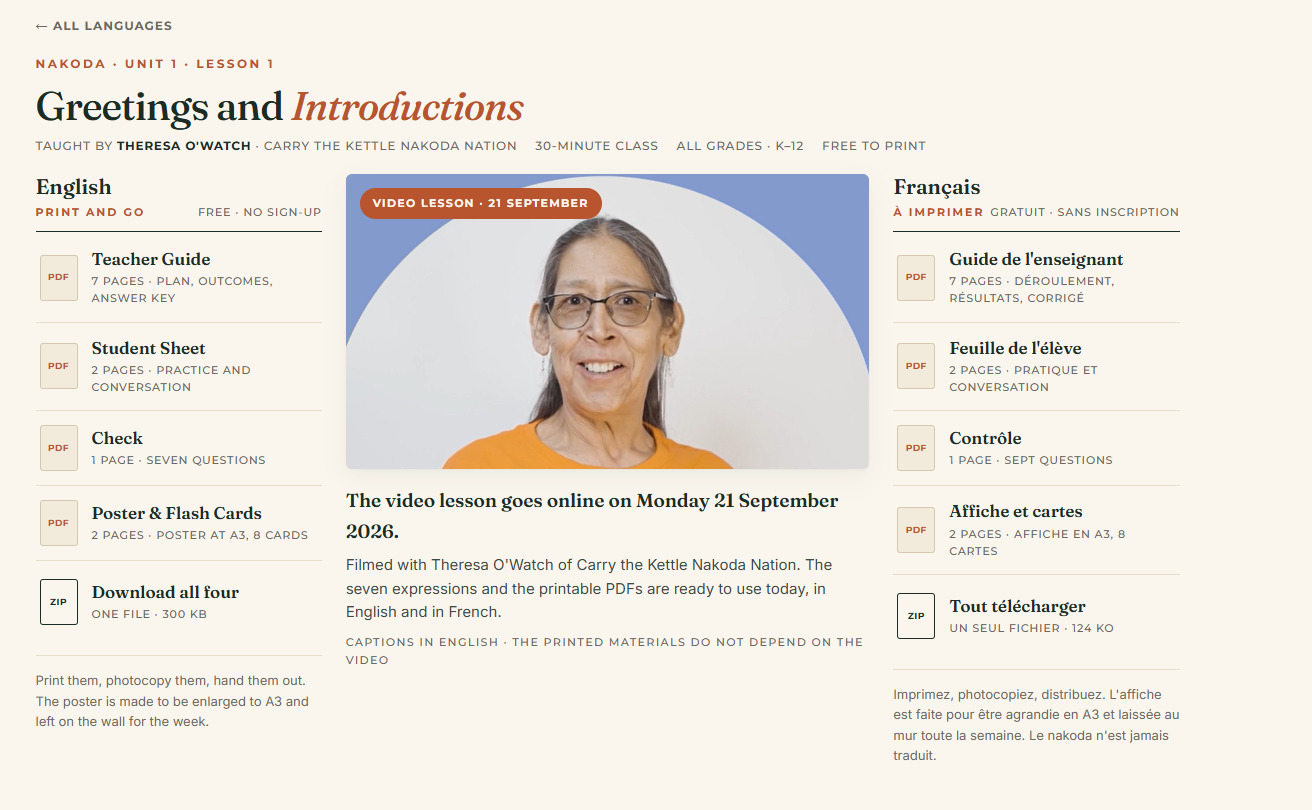
The lesson is the first offering through Canadian Languages, an online kindergarten-to-Grade 12 resource developed by Zarry, a Regina-based French-immersion teacher. Its printable materials are available now, with O’Watch’s video scheduled to go online Sept. 21.

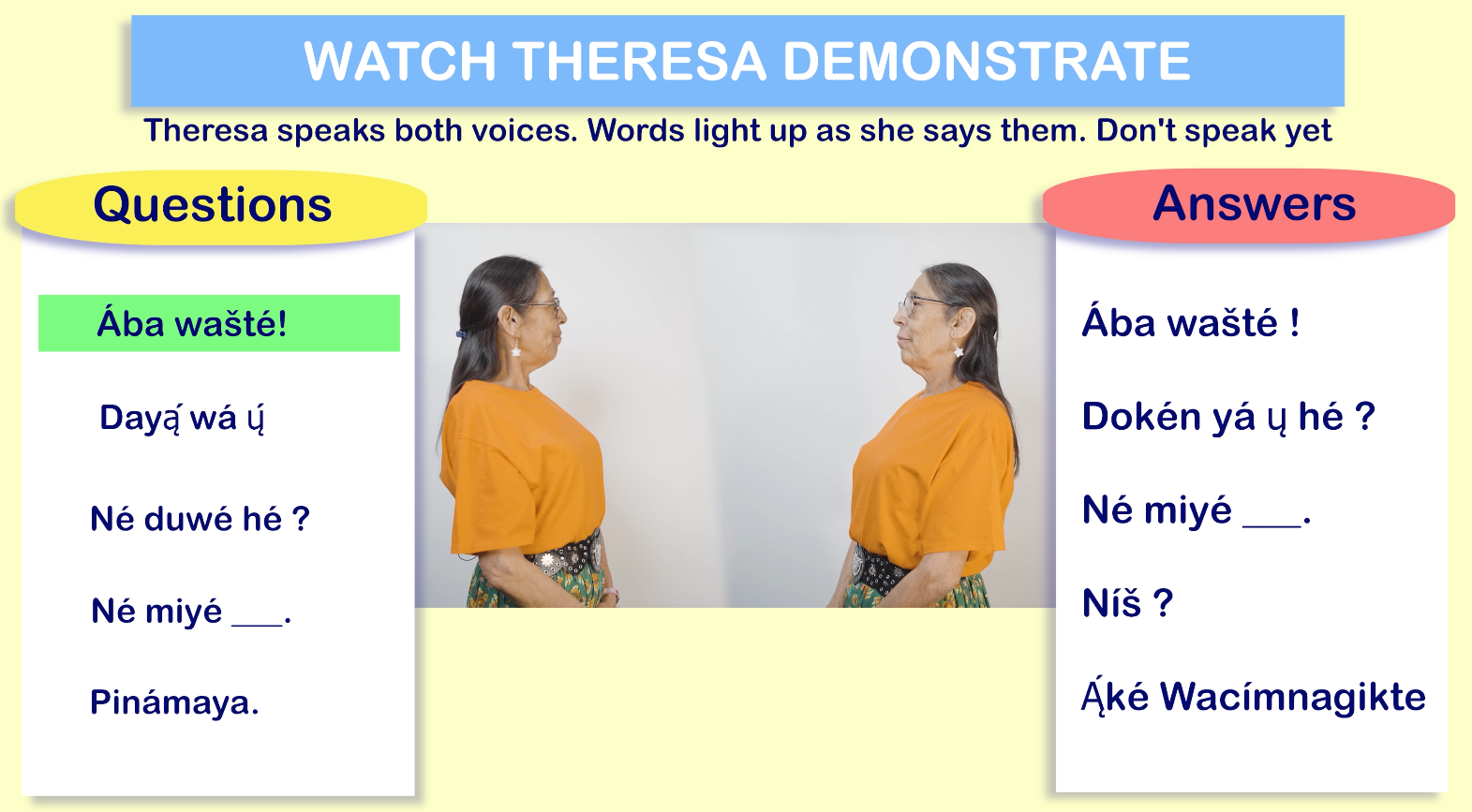
Nakoda language teacher Theresa O’Watch of Carry the Kettle Nakoda Nation teaches introductory expressions in a video lesson developed for kindergarten to Grade 12 classrooms.
Nakoda language teacher Theresa O’Watch of Carry the Kettle Nakoda Nation teaches introductory expressions in a video lesson developed for kindergarten to Grade 12 classrooms. (Image Credit: (Screenshot/Canadian Languages))

The launch comes as census figures illustrate the small number of people reporting conversational ability in the language.

The project uses the name Nakoda, while Statistics Canada’s 2021 census table uses Assiniboine. It counted only 185 First Nations people living in Saskatchewan who reported being able to speak the language well enough to conduct a conversation. Across the Prairies, the number was 325.

Those figures refer to conversational ability reported by First Nations respondents, not everyone who may have learned some words or phrases.

Zarry said the provincial Nakoda curriculum was developed by Carry the Kettle Nakoda Nation with its own linguists and knowledge keepers. His concern is that written curriculum does not automatically become a class when a school lacks someone able to deliver the language instruction.

The online format is intended to make that first lesson accessible without shifting the teaching authority away from the community. Zarry draws a clear boundary around the roles: he produced the resource, while O’Watch teaches the Nakoda.

Her 10-minute video is accompanied by a teacher guide, student sheet, seven-question check and a poster with flash cards. The materials are available in English and French, while the video carries English captions.

Nakoda language teacher Theresa O’Watch of Carry the Kettle Nakoda Nation teaches introductory expressions in a video lesson developed for kindergarten to Grade 12 classrooms.
Nakoda language teacher Theresa O’Watch of Carry the Kettle Nakoda Nation teaches introductory expressions in a video lesson developed for kindergarten to Grade 12 classrooms. (Image Credit: (Screenshot/Canadian Languages))

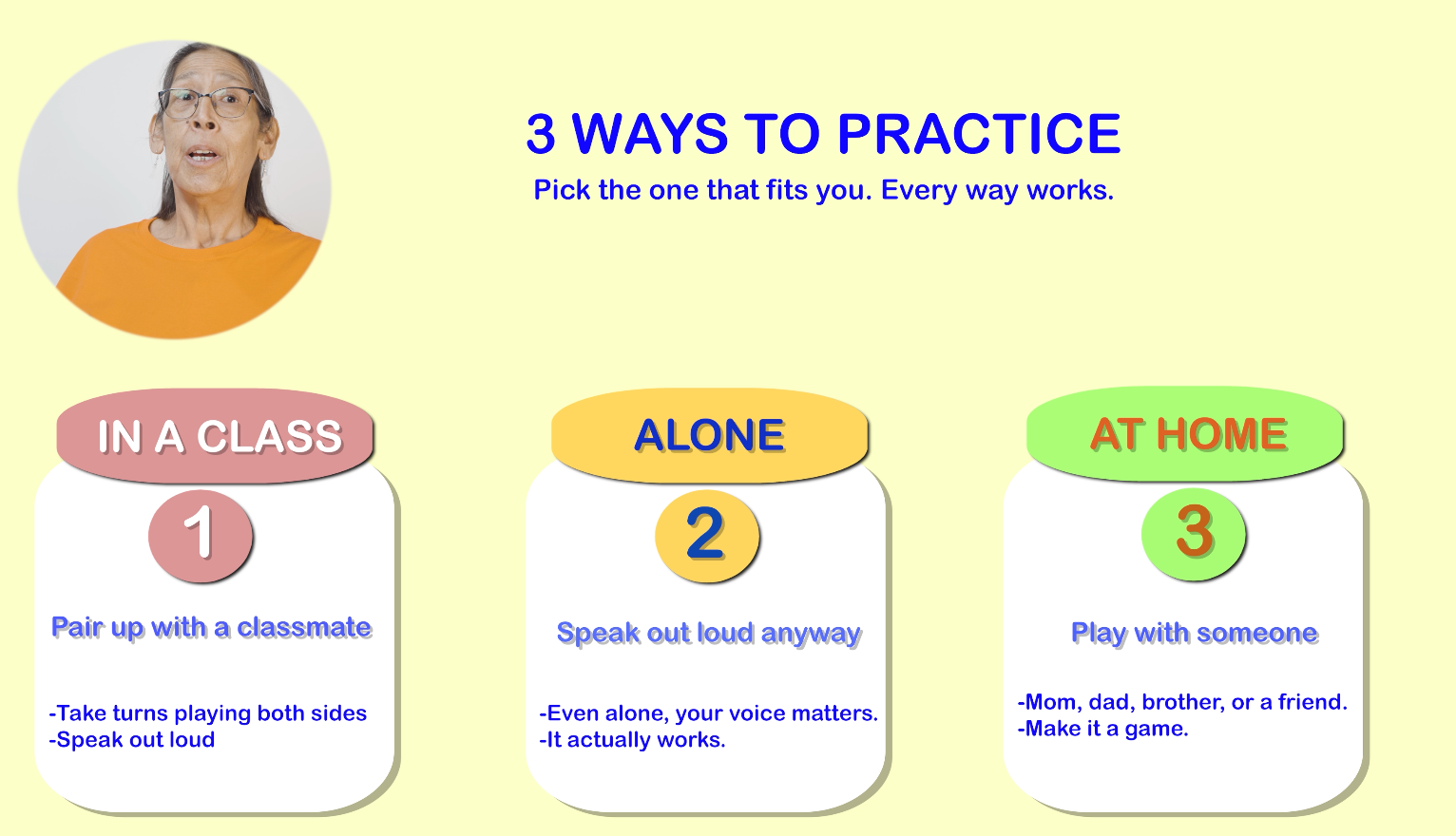
Teachers pause the video as students repeat O’Watch’s pronunciation and complete the exercises. The resource is presented as a language lesson rather than a social studies unit, with the classroom teacher managing the activities while O’Watch provides the instruction.

Although it can be used from kindergarten through Grade 12, the lesson is organized by language ability rather than age. It sits at Step 1 of Saskatchewan’s First Nations and Métis Language Framework, allowing beginners in different grades to start with the same expressions.

The project grew out of relationships Zarry developed while making two educational documentaries, 10 Days of Cree and 10 Days of Nakota.

“What inspired me is people above all,” he said.

Zarry met O’Watch while filming 10 Days of Nakota in 2022. During the project, he learned from speakers across three Saskatchewan communities, including a girl who was 10 at the time.

He said he and O’Watch quickly connected over their ideas about the language and how to introduce it to young people. When he later proposed the classroom project, she accepted.

Zarry’s route to that work began far from Saskatchewan. Born in Casablanca, Morocco, and raised in Paris, he later moved to Canada and came to Regina in 2013. He earned an education degree from the University of Regina and became a French-immersion teacher.

He said teaching French as a minority language in Saskatchewan influenced how he thought about language education. His interest in Indigenous languages developed further at the university through educators, conferences and relationships with people from different First Nations.

The subject also carries a personal connection. Zarry said the Indigenous language of his ancestors in Morocco received official recognition there in 2011.

“People were speaking it for almost 2,000, 3,000 years, and the officialization came in 2011,” he said.

Zarry said his main motivation in Saskatchewan nevertheless came from the people he met at the university and in the communities that welcomed him during his documentary work.

The greetings lesson is the first of seven he envisions for the opening Nakoda unit, with numbers planned as the next subject. For now, it is the only completed lesson.

Zarry plans to introduce the resource to schools and divisions and eventually hopes to work with Indigenous communities to add more languages to the platform.

That wider ambition begins with seven expressions spoken by one community teacher and repeated in classrooms.

The first is “Ába wašté.”

Hello.

Kenneth.Cheung@pattisonmedia.com